
Fatty liver disease has become one of the fastest-growing liver conditions worldwide. Millions of adults now live with MASH (metabolic dysfunction-associated steatohepatitis), previously known as NASH.
For years, treatment options were limited mainly to weight loss, exercise, and lifestyle modification.
That changed with Resmetirom, the first FDA-approved medicine specifically designed for MASH with liver fibrosis.
But many patients and healthcare professionals are now asking:
How does Resmetirom actually work?
In this guide, we explain the Resmetirom mechanism of action, how it targets liver fat, and why it represents a breakthrough in fatty liver treatment.
Resmetirom is a selective thyroid hormone receptor beta (THR-β) agonist that primarily acts in the liver to reduce fat accumulation, inflammation, and fibrosis. (NCBI)
What Is Resmetirom?
Resmetirom (brand name Rezdiffra) is an oral prescription drug approved for adults with:
- non-cirrhotic MASH
- moderate to advanced fibrosis (F2–F3)
It is used alongside:
- diet modification
- exercise
- weight loss strategies
Unlike older off-label approaches, Resmetirom was specifically developed to target the underlying metabolic dysfunction inside the liver. (NCBI)
What Makes Resmetirom Different?
The biggest breakthrough is its liver-specific action.
Instead of acting broadly like thyroid hormone throughout the body, Resmetirom selectively stimulates the thyroid hormone receptor beta found mainly in liver cells.
This selective action helps avoid unwanted stimulation of tissues such as:
- heart
- bone
- skeletal muscle
That’s why it is called a thyroid hormone receptor beta agonist. (NCBI)
How Does Resmetirom Work?
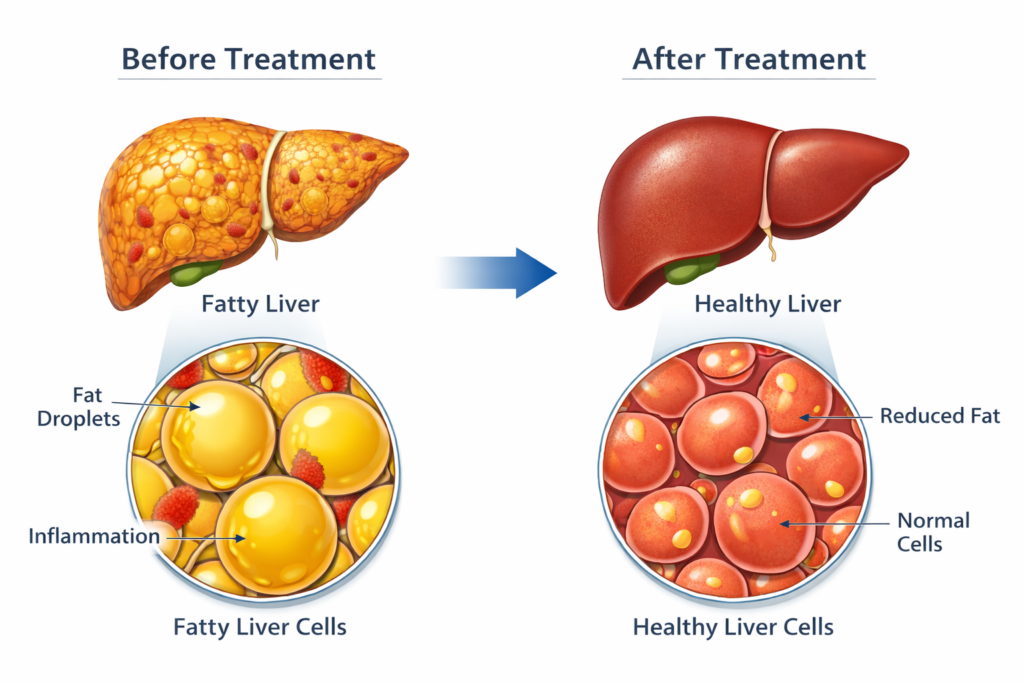
The short answer:
Resmetirom mimics thyroid hormone activity inside the liver.
Here’s the mechanism in simple terms.
1. It Activates THR-Beta Receptors in Liver Cells
The liver contains receptors called thyroid hormone receptor beta (THR-β).
These receptors regulate:
- fat metabolism
- cholesterol breakdown
- energy usage
- fatty acid oxidation
Resmetirom binds to these receptors and activates them.
This tells the liver to burn stored fat more efficiently. (MDPI)
2. It Reduces Liver Fat
One of the core problems in MASH is excess fat accumulation in hepatocytes.
Resmetirom helps by:
- decreasing de novo lipogenesis (new fat production)
- increasing fat burning
- reducing triglyceride buildup
This directly reduces hepatic steatosis, which is the first stage of fatty liver disease. (NCBI)
3. It Lowers Inflammation
Fatty liver disease progresses when excess fat begins to trigger inflammation.
This leads to:
- liver cell injury
- ballooning degeneration
- inflammatory signaling
By reducing fat toxicity, Resmetirom helps reduce this inflammatory cascade.
This is one of the reasons it improves MASH resolution rates. (Nature)
4. It Helps Reverse Fibrosis
Fibrosis means scar tissue formation inside the liver.
Persistent inflammation activates stellate cells that produce scar tissue.
By reducing:
- fat
- oxidative stress
- inflammation
Resmetirom may slow or even partially reverse fibrosis progression in selected patients. (Nature)
Why Is THR-Beta Selectivity Important?
This is the scientific reason Resmetirom is considered a major innovation.
Thyroid hormone acts on two main receptors:
- THR-alpha
- THR-beta
THR-alpha is found more in:
- heart
- bones
THR-beta is found predominantly in:
- liver
Resmetirom is highly selective for THR-beta, reducing the risk of side effects such as:
- rapid heart rate
- palpitations
- bone loss
This receptor selectivity is central to the MASH drug mechanism. (MDPI)
What Results Have Studies Shown?
Clinical trials showed significant benefits in patients with MASH.
Key outcomes included:
- reduced liver fat on imaging
- improved liver enzymes
- better cholesterol levels
- improvement in fibrosis
- MASH resolution in a significant percentage of patients
In one phase 3 study, MASH resolution occurred in approximately 26–30% of treated patients versus about 10% with placebo. (Nature)
This is a major advance compared with lifestyle-only approaches.
Does Resmetirom Help Cholesterol Too?
Yes.
One additional advantage is improvement in lipid markers.
Resmetirom can reduce:
- LDL cholesterol
- triglycerides
- ApoB
- liver fat–related dyslipidemia
This is especially important because many patients with MASH also have:
- obesity
- diabetes
- metabolic syndrome
- cardiovascular risk
(NCBI)
Who Should Consider Resmetirom?
This drug is generally considered for adults with:
- confirmed MASH
- fibrosis stage F2–F3
- no cirrhosis
- ongoing lifestyle intervention
It should always be prescribed under specialist supervision.
This is not a self-treatment medicine.
Common Side Effects
Commonly reported side effects include:
- diarrhea
- nausea
- itching
- mild liver enzyme changes
Patients need regular monitoring with liver function tests. (NCBI)
Final Thoughts: Why Resmetirom Matters
Resmetirom represents a major milestone in liver medicine.
By selectively activating thyroid hormone receptor beta in the liver, it directly targets the metabolic pathways that drive fatty liver disease.
In simple words:
It helps the liver burn fat, reduce inflammation, and slow scarring.
For patients with MASH, this is one of the most important therapeutic breakthroughs in recent years.

After 38 Years of Medical Practice I have started to share insights from my experience over this blog. Know more about me here on About Page and Visit my LinkedIn profile.