
Resmetirom, sold under the brand name Rezdiffra, is the first FDA-approved medication for treating MASH (metabolic dysfunction–associated steatohepatitis) with moderate to advanced liver fibrosis.
This breakthrough treatment has created significant hope for patients with fatty liver disease.
But before starting the medication, one question matters most:
Is resmetirom safe?
Like every prescription medicine, resmetirom comes with potential side effects and risks that patients should understand clearly.
In this article, we explain the common side effects, serious risks, safety profile, and who should be cautious before taking resmetirom.
What Is Resmetirom?
Resmetirom is a thyroid hormone receptor-beta (THR-beta) agonist that works primarily in the liver.
It helps reduce:
- liver fat accumulation
- inflammation
- fibrosis progression
- LDL cholesterol and triglycerides
It is approved for adults with non-cirrhotic MASH / NASH with stage F2–F3 fibrosis, along with diet and exercise. (FDA Access Data)
Because this is a relatively new drug, understanding its safety profile is essential before treatment.
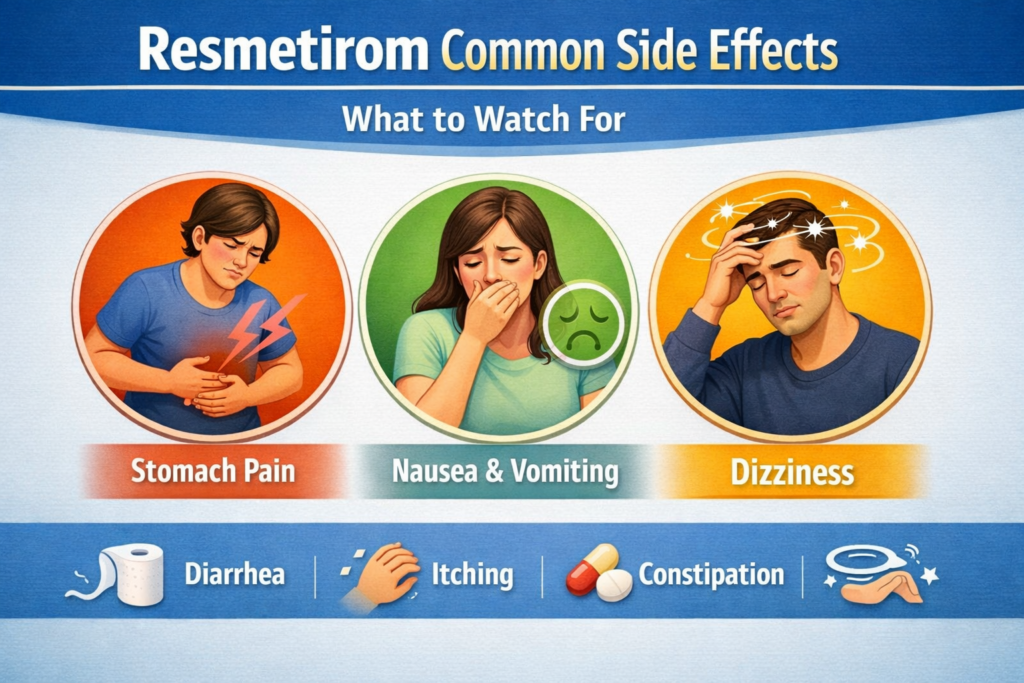
Common Resmetirom Side Effects
The most frequently reported resmetirom side effects are generally mild to moderate.
According to the FDA prescribing information, the most common adverse reactions include: (FDA Access Data)
- diarrhea
- nausea
- itching (pruritus)
- vomiting
- constipation
- abdominal pain
- dizziness
These are the side effects most patients may notice during the first few weeks after starting therapy.
1. Diarrhea
Diarrhea is one of the most common complaints with resmetirom.
Many patients experience:
- loose stools
- increased bowel frequency
- mild abdominal cramping
This side effect is often more noticeable during the initial phase of treatment and may improve as the body adjusts. (PMC)
How long does it last?
For many patients, diarrhea improves within 2–6 weeks.
Maintaining hydration is important.
2. Nausea and Vomiting
Some patients report feeling:
- mild nausea
- upset stomach
- occasional vomiting
This is especially common if the medicine is taken on an empty stomach.
Practical tips include:
- taking the medication at the same time daily
- eating light meals
- avoiding greasy foods
3. Abdominal Pain
Mild stomach discomfort or abdominal pain may occur.
This can include:
- bloating
- upper abdominal heaviness
- cramps
However, severe upper right abdominal pain requires immediate medical attention, because it may indicate gallbladder complications.
4. Itching (Pruritus)
Itching is another commonly reported side effect.
Patients may notice:
- generalized skin itching
- mild irritation without rash
If itching is intense or associated with yellowing of the eyes, it may indicate liver-related issues and should be evaluated immediately.
Serious Resmetirom Risks Patients Must Know
While common side effects are manageable, some risks are medically important.
1. Liver Injury (Hepatotoxicity)
This is one of the most important warnings.
The FDA specifically warns about hepatotoxicity. (FDA Access Data)
Symptoms include:
- extreme fatigue
- fever
- nausea
- right upper abdominal pain
- yellow eyes or skin
- rash
If these symptoms develop, the medication may need to be stopped immediately.
Doctors usually monitor:
- ALT
- AST
- bilirubin
- alkaline phosphatase
Regular liver function testing is essential.
2. Gallbladder Problems
Resmetirom may increase the risk of gallbladder-related events. (FDA Access Data)
These include:
- gallstones
- cholecystitis
- gallstone pancreatitis
Warning symptoms:
- severe stomach pain
- pain radiating to the back
- vomiting
- fever
This is especially important in patients who already have fatty liver disease, obesity, or metabolic syndrome.
Is Resmetirom Safe?
This is one of the most searched questions online.
The short answer:
Yes, resmetirom is considered safe when used under proper medical supervision.
It has been FDA approved after clinical trials showed meaningful benefits in MASH resolution and fibrosis improvement. (Drugs.com)
However, “safe” does not mean risk-free.
The medication should be taken only after:
- proper diagnosis
- fibrosis staging
- liver assessment
- medication interaction review
Who Should Be More Careful?
Certain patients require extra caution.
These include people with:
- existing liver disease beyond MASH
- cirrhosis
- gallstones
- thyroid disorders
- multiple cholesterol medications
The FDA advises avoiding use in moderate to severe hepatic impairment and decompensated cirrhosis. (FDA Access Data)
Important Drug Interactions
Resmetirom can interact with other medications.
Important examples include: (FDA Access Data)
- gemfibrozil
- clopidogrel
- cyclosporine
- statins
- certain CYP2C8 drugs
This is highly relevant because many MASH patients also take cholesterol medications.
Always discuss all prescriptions with your physician.
What Patients Should Do Before Starting
Before beginning treatment, discuss:
Liver tests
- ALT
- AST
- fibrosis score
- FibroScan / biopsy reports
Gallbladder history
- previous stones
- cholecystitis
- surgery history
Current medications
Especially:
- statins
- diabetes drugs
- thyroid medications
Final Thoughts: Should You Be Worried?
Most patients tolerate resmetirom reasonably well.
The most common issues are digestive side effects like diarrhea and nausea.
The key is regular medical monitoring.
For eligible patients with moderate to advanced MASH fibrosis, the benefits may outweigh the risks.
Because MASH can silently progress to cirrhosis and liver failure, early treatment decisions are extremely important.

After 38 Years of Medical Practice I have started to share insights from my experience over this blog. Know more about me here on About Page and Visit my LinkedIn profile.