
As new treatments emerge for metabolic liver diseases like nonalcoholic steatohepatitis (NASH), patients often wonder not only about disease improvement but also about how these medications might affect their weight and body composition. One of the most frequently asked questions is:
“What does Rezdiffra weight loss before and after look like for patients—does this drug help with weight changes?”
This question reflects the interest many individuals have in outcomes beyond liver health. While Rezdiffra (generic name resmetirom) is approved to treat NASH, weight change—especially visible changes like before-and-after transformations—is not its intended or proven effect. However, since metabolic health and weight are closely related, patients are curious whether they might see changes in their body shape, waistline, or overall weight during treatment.
In this article, we’ll review:
- What Rezdiffra is and how it works
- What clinical evidence says about weight changes
- Why before-and-after weight transformation stories should be interpreted carefully
- What patients can realistically expect
- Lifestyle strategies that support better overall outcomes
This discussion is informational, not medical advice. Always consult a qualified healthcare provider before making decisions about treatment or interpreting individual results.
Section 1: What Is Rezdiffra and Why Was It Approved?
Rezdiffra is the brand name for the drug resmetirom, a thyroid hormone receptor beta (THR-β) agonist specifically developed to treat nonalcoholic steatohepatitis (NASH) in adults with moderate to advanced fibrosis. It was granted accelerated approval by the U.S. Food and Drug Administration (FDA) in March 2024 based on data from a large Phase 3 clinical trial showing improvements in liver histology and fibrosis compared with placebo. (U.S. Food and Drug Administration)
Approved Use
The FDA approval specifies that Rezdiffra should be used with diet and exercise to treat adults with biopsy-confirmed NASH with fibrosis. (U.S. Food and Drug Administration)
How It Works
Resmetirom targets THR-β receptors in the liver, enhancing the liver’s ability to metabolize fat and reduce fat accumulation. Unlike systemic thyroid hormones, this liver-focused action helps lower steatosis, inflammation, and fibrosis progression. (Drugs.com)
Importantly:
- Rezdiffra’s mechanism focuses on liver fat metabolism
- It is not designed to act on appetite centers
- It is not officially approved for weight loss or body composition changes
Weight change is therefore not an expected or labeled outcome, but rather a potential secondary or incidental observation.
Section 2: Does Rezdiffra Cause Weight Loss? The Evidence So Far
Overall clinical trial data and medical reviews make an important point:
Rezdiffra is not indicated for weight loss, and weight change has not been demonstrated as a consistent or primary effect. (Healthline)
What Clinical Trials Were Designed to Measure
Phase 3 trials such as MAESTRO-NASH were designed to evaluate:
- Resolution of NASH without worsening of fibrosis
- Improvement in fibrosis stage
- Changes in liver enzyme and lipid biomarkers
Patients on Rezdiffra were compared with placebo groups over 52 weeks of treatment. (Rezdiffra® (resmetirom) HCP Website)
Weight change was not a primary or key secondary endpoint. This means trials were not powered to detect meaningful differences in weight, and body weight was typically recorded mainly for safety monitoring, not as a measure of effectiveness. This is a key distinction that affects the interpretation of before-and-after weight experiences.
Reported Weight Changes
According to current medical summaries and drug information sources:
- Weight was not reported as a common side effect
- Rezdiffra does not cause weight gain as a labeled side effect either (Healthline)
Some trial sub-analyses and real-world observations have noted that patients who lose weight (≥ 5% of body weight) while on Rezdiffra tend to experience better liver outcomes, but this is correlated with general weight loss—not attributable directly to the drug itself. (PubMed)
Section 3: Real-World Weight Stories — Before and After
In the era of online health forums and patient communities, many individuals share personal experiences with weight change while taking medications like Rezdiffra. These anecdotal stories often include before-and-after descriptions.
It’s important to interpret these with several considerations in mind:
1. Anecdotal Doesn’t Mean Typical
Some patients report weight change while taking Rezdiffra, but:
- Most also changed diet, exercise, or added other medications
- Weight changes vary widely
- Some experience weight stability or slight gain
Forums such as Reddit show a mix of narratives:
- Some individuals reported weight loss while taking Rezdiffra, though they also engaged in lifestyle changes like diet and exercise. (Reddit)
- Others did not notice significant weight change at all. (Reddit)
These differences highlight that individual responses can vary and are influenced by many factors beyond the medication alone.
2. Weight Change May Be Indirect or Coincidental
For people with NASH, weight loss often results from:
- Improved metabolic awareness after diagnosis
- Lifestyle modifications following medical advice
- Concurrent use of other medications that have appetite-regulating effects
Without controlled study data, before-and-after weight stories cannot be interpreted as evidence that Rezdiffra caused the change.
3. Individual Experiences Are Not Clinical Proof
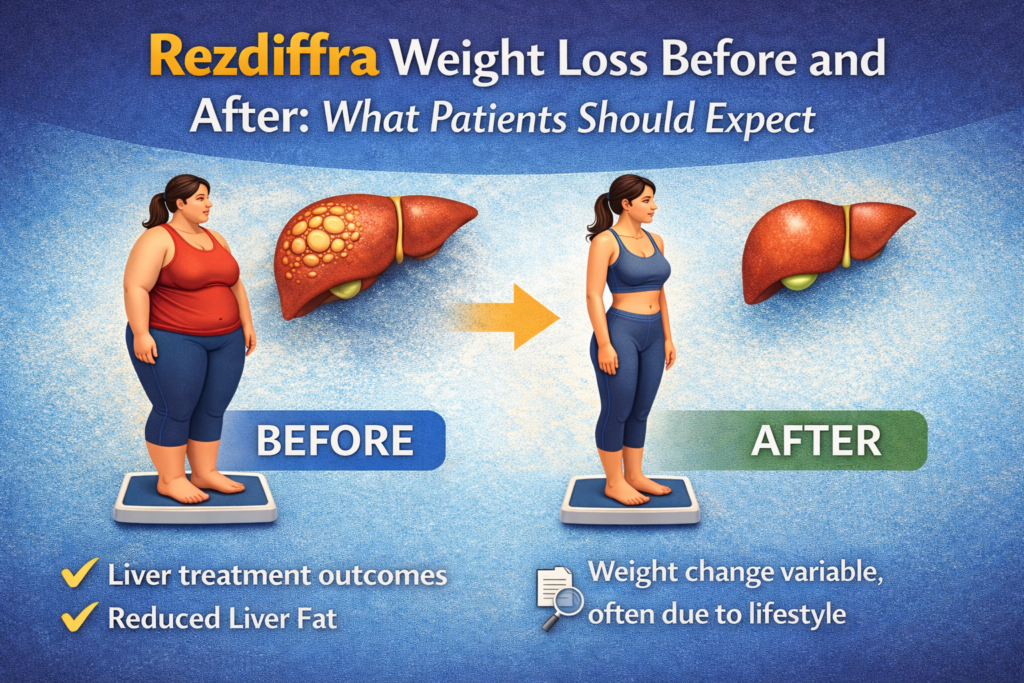
While patient testimonials can be inspiring, they are not substitutes for evidence from well-conducted clinical trials. Before-and-after photos and personal stories do not provide controlled or unbiased evidence of an effect.
Section 4: Understanding Why Weight Change Might Be Reported
If clinical trials did not measure weight changes as a primary outcome, why do some patients report weight change on forums or in clinical settings?
Here are possible contributing factors:
1. Lifestyle Changes After Diagnosis
A new diagnosis often motivates people to:
- Eat healthier
- Increase physical activity
- Reduce processed food and alcohol intake
- Improve sleep and stress management
These changes alone can lead to before-and-after weight differences.
2. Improved Metabolic Health
Rezdiffra’s effect on liver fat and lipid metabolism may improve overall metabolic markers. People might feel better, have more energy, and inadvertently improve health behaviors.
3. Use of Other Medications
Some patients may be using other medications alongside Rezdiffra (such as GLP-1 receptor agonists) that are known to influence weight regulation. (PubMed)
Section 5: What Patients Should Expect After Starting Rezdiffra
1. Liver-Specific Improvements
Patients most commonly report improvements related to:
- Reduced liver fat accumulation
- Better liver enzyme levels
- Improved histologic markers of NASH
These outcomes have been demonstrated in the MAESTRO-NASH trial and similar studies and form the basis for Rezdiffra’s FDA approval. (U.S. Food and Drug Administration)
2. Variable Weight Responses
There is no consistent evidence showing Rezdiffra directly causes weight loss:
- Some patients maintain stable weight
- Some may lose weight along with lifestyle changes
- Some may not see any noticeable change
In summary: Rezdiffra is not a weight-loss drug.
3. Side Effects to Be Aware Of
Reported side effects include:
- Mild gastrointestinal symptoms (nausea, diarrhea)
- Pruritis or abdominal discomfort
- Constipation
- Dizziness
These are related to gastrointestinal tolerance or individual sensitivities, not weight reduction. (Madrigal Pharma)
Section 6: Interpreting Before and After Results Responsibly
When creating or using before-and-after comparisons in your blog or practice:
1. Frame Them Appropriately
If you include such comparisons:
- Clarify that Rezdiffra is not a drug approved for weight loss
- Explain that any weight change results from a combination of factors
- Avoid implying that the medication itself caused the weight change
2. Use Evidence-Based Context
Clinical trial data support liver health improvements, not weight loss. (Rezdiffra® (resmetirom) HCP Website)
3. Emphasize Lifestyle Factors
Encourage patients to continue evidence-based lifestyle changes alongside medical therapy.
Section 7: How Long Does It Take to See Changes? (Realistic Timelines)
Liver Health Improvements
In clinical trials, statistically significant liver histology changes were often measured after 52 weeks of treatment. (Rezdiffra® (resmetirom) HCP Website)
Weight or Waist Changes (If Any)
If a patient experiences weight changes, they typically occur over months and are influenced by:
- Diet changes
- Physical activity
- Other medications
- Baseline metabolic health
This underscores that before-and-after differences in weight within a year may not be attributable to Rezdiffra alone.
Section 8: Summary of Rezdiffra Weight Loss Before and After Findings
Here’s a plain-language summary of what the evidence and expert interpretation say:
- Rezdiffra is approved for NASH treatment, not weight loss. (U.S. Food and Drug Administration)
- Clinical trials do not show consistent weight loss attributable to the drug. (Healthline)
- Some patients may lose weight, but usually due to lifestyle changes or other factors.
- Before-and-after stories can be inspiring but do not constitute proof of drug-induced weight change.
- Anyone interested in body composition changes should discuss holistic metabolic management with their clinician.
Section 9: Frequently Asked Questions (SEO FAQ)
Q1: Does Rezdiffra make people lose weight?
A: Rezdiffra is not approved for weight loss and has not demonstrated consistent weight loss effects in clinical trials. (Healthline)
Q2: Can patients expect a before-and-after weight difference on Rezdiffra?
A: Some patients who make lifestyle changes may notice weight changes, but this is not directly caused by the medication.
Q3: How should before-and-after images be interpreted?
A: With caution, making clear that weight changes may be due to lifestyle factors and not the drug itself.
Q4: Is Rezdiffra effective for improving liver health?
A: Yes—clinical trials showed improvements in liver histology and fibrosis. (Rezdiffra® (resmetirom) HCP Website)
Q5: Should Rezdiffra be used for weight loss?
A: No; it is not indicated or approved for obesity treatment.
Section 10: Take-Home Messages
- Rezdiffra’s primary benefit is liver-focused and supported by clinical evidence. (U.S. Food and Drug Administration)
- Weight change is not reliably observed as a direct drug effect. (Healthline)
- Lifestyle changes remain essential for overall metabolic health and body composition goals.
- Before-and-after representations should be contextualized to avoid misleading interpretations.
Medical Disclaimer
This article is for educational purposes only and does not provide medical advice, diagnosis, or treatment recommendations. Always consult a qualified healthcare professional before starting, stopping, or changing any medication.
Final Thoughts
Although many patients talk about their Rezdiffra weight loss before and after experiences, it is important to interpret these with nuance and medical context. Rezdiffra was developed and approved to treat liver disease, not to cause weight loss. Real changes in weight or body shape are more likely the result of overall lifestyle improvements, other medications, individual variation, and general metabolic management.
Approaching before-and-after results responsibly and focusing on evidence-based outcomes will help patients and readers build realistic expectations and make informed decisions in collaboration with their healthcare providers.