
With the rapid rise of metabolic disorders such as obesity, type 2 diabetes, and fatty liver disease, medications that influence metabolism often attract attention beyond their original purpose. Two such medications frequently compared online are Rezdiffra (resmetirom) and Ozempic (semaglutide).
A common question asked by patients and readers alike is:
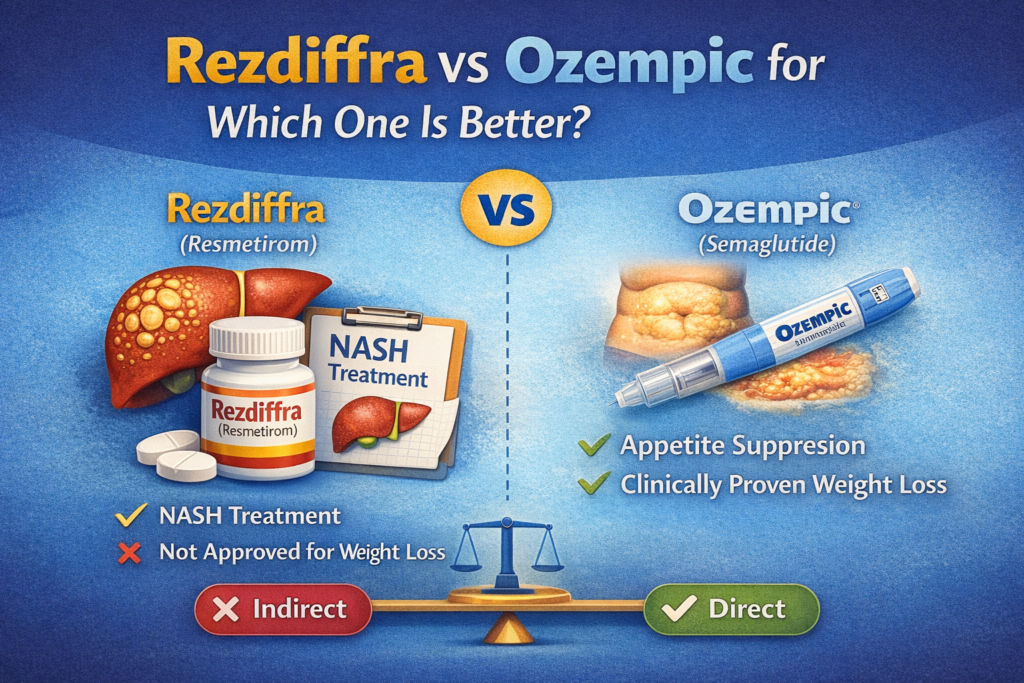
Rezdiffra vs Ozempic for weight loss: which one is better?
At first glance, this comparison may seem reasonable. Both drugs are linked to metabolic pathways, and both have been associated—directly or indirectly—with changes in body weight. However, from a medical and regulatory standpoint, these two medications are fundamentally different in their purpose, mechanism of action, and clinical evidence related to weight loss.
This article provides a clear, evidence-based comparison, explaining:
- What each drug is approved for
- How they work in the body
- What clinical trials show about weight loss
- Why comparing them directly can be misleading
- Which medication is more appropriate for which patient profile
This discussion is informational only and does not constitute medical advice.
Understanding the Two Medications at a Glance
Before comparing weight loss outcomes, it is essential to understand why these drugs exist and what problems they are designed to solve.
Rezdiffra (Resmetirom)
- Drug class: Thyroid hormone receptor beta (THR-β) agonist
- Primary target: Liver metabolism
- FDA-approved for: Nonalcoholic steatohepatitis (NASH) with fibrosis
- Weight loss approval: ❌ No
Ozempic (Semaglutide)
- Drug class: GLP-1 receptor agonist
- Primary target: Appetite regulation and glucose metabolism
- FDA-approved for: Type 2 diabetes (weight loss as a secondary benefit)
- Weight loss approval: ✅ Indirect (higher-dose formulation approved under a different brand for obesity)
From the outset, it is clear that Ozempic is directly connected to weight management, while Rezdiffra is not.
Why People Compare Rezdiffra vs Ozempic for Weight Loss
The comparison arises for several reasons:
- Both affect metabolism
- Both are used in patients with metabolic disease
- Clinical trials for both track body weight
- Online discussions often blur approved use vs observed effects
However, the intent of treatment matters greatly when interpreting outcomes.
How Rezdiffra Works (Mechanism of Action)
Rezdiffra (resmetirom) selectively activates thyroid hormone receptor beta (THR-β), which is predominantly expressed in the liver.
Key metabolic effects:
- Increased hepatic fat oxidation
- Reduction in liver fat accumulation
- Improvement in liver inflammation
- Favorable changes in lipid profiles (especially LDL cholesterol)
What Rezdiffra does NOT do:
- Does not suppress appetite
- Does not act on the brain’s hunger centers
- Does not directly increase calorie expenditure
- Does not alter food intake behavior
Any weight change observed with Rezdiffra is therefore considered secondary and indirect, arising from improved liver metabolism rather than intentional weight reduction.
How Ozempic Works (Mechanism of Action)
Ozempic (semaglutide) is a GLP-1 receptor agonist, a class of drugs that mimic the action of the incretin hormone GLP-1.
Key effects related to weight loss:
- Slows gastric emptying
- Enhances satiety
- Reduces appetite
- Lowers caloric intake
- Improves insulin sensitivity
Ozempic acts on:
- The gut
- The pancreas
- The central nervous system
This makes Ozempic a weight-loss–relevant medication by design, even though its original approval was for diabetes management.
Clinical Trial Evidence: Rezdiffra Weight Loss Results
Were Rezdiffra Trials Designed to Measure Weight Loss?
No.
In Rezdiffra clinical trials:
- Primary endpoints focused on liver histology, fibrosis improvement, and fat reduction
- Weight change was not a primary or key secondary endpoint
- Body weight was recorded mainly for safety monitoring
What Was Observed?
Across trials:
- Some participants experienced modest weight reduction
- Others showed no significant change
- Weight changes were variable and inconsistent
There was:
- No predictable amount of weight loss
- No dose-dependent weight reduction
- No appetite-related mechanism identified
Interpretation
From a clinical standpoint:
Rezdiffra does not demonstrate clinically meaningful or consistent weight loss.
Any observed weight change is considered incidental, not therapeutic.
Clinical Trial Evidence: Ozempic Weight Loss Results
In contrast, weight change has been extensively studied with semaglutide.
Key findings from trials:
- Significant average weight reduction compared to placebo
- Weight loss occurs progressively over months
- Effects are reproducible across populations
In higher-dose studies (approved under a different brand for obesity):
- Average weight loss was substantial
- Appetite suppression was a key driver
Interpretation
Ozempic’s weight loss effect is:
- Intentional
- Dose-dependent
- Clinically significant
Direct Comparison: Rezdiffra vs Ozempic for Weight Loss
| Feature | Rezdiffra | Ozempic |
|---|---|---|
| Primary purpose | Treat NASH | Treat diabetes / support weight loss |
| Approved for weight loss | ❌ No | ✅ (via related formulations) |
| Appetite suppression | ❌ No | ✅ Yes |
| CNS action | ❌ No | ✅ Yes |
| Consistent weight loss | ❌ No | ✅ Yes |
| Mechanism targets weight | ❌ Indirect | ✅ Direct |
Which One Is “Better” for Weight Loss?
From an evidence-based perspective, the answer is clear:
Ozempic is significantly more effective for weight loss than Rezdiffra.
However, this does not mean Ozempic is “better” overall. It depends entirely on the medical goal.
When Rezdiffra May Be More Appropriate
Rezdiffra may be preferred when:
- The primary diagnosis is NASH with fibrosis
- Liver histology improvement is the main objective
- Weight loss is not the primary goal
- Appetite suppression is undesirable
Using Rezdiffra solely for weight loss would be medically inappropriate, as it is not approved or designed for that purpose.
When Ozempic May Be More Appropriate
Ozempic may be preferred when:
- Weight reduction is a major clinical goal
- The patient has type 2 diabetes or obesity
- Appetite control is beneficial
- Lifestyle measures alone are insufficient
Ozempic’s effects on weight are intentional and well-documented.
Can Rezdiffra and Ozempic Be Compared Fairly?
Not entirely.
Comparing Rezdiffra and Ozempic for weight loss is similar to comparing:
- A liver-specific metabolic drug
with - A centrally acting appetite-modifying drug
They address different diseases, through different biological pathways, with different intended outcomes.
Safety and Side Effect Considerations (Brief Overview)
Rezdiffra
Reported side effects may include:
- Mild gastrointestinal symptoms
- Changes in liver enzymes (monitored)
- Fatigue or headache in some patients
Weight loss is not a recognized adverse effect.
Ozempic
Common side effects include:
- Nausea
- Vomiting
- Diarrhea or constipation
- Appetite suppression
Weight loss is considered a pharmacological effect, not a side effect.
Common Misconceptions
“Rezdiffra causes weight loss like Ozempic”
❌ Incorrect. Their mechanisms and outcomes are fundamentally different.
“If I have fatty liver, Rezdiffra will help me lose weight”
❌ Not reliably. Any weight change is secondary and unpredictable.
“Ozempic treats fatty liver the same way”
❌ Ozempic may reduce weight, which can indirectly benefit liver fat, but it does not directly target liver fibrosis like Rezdiffra.
Frequently Asked Questions (SEO Section)
Is Rezdiffra better than Ozempic for weight loss?
No. Ozempic has significantly stronger and more consistent evidence for weight loss.
Does Rezdiffra help with weight reduction?
Some patients may experience minor weight changes, but Rezdiffra is not intended or approved for weight loss.
Can Rezdiffra replace Ozempic?
No. They serve different clinical purposes and are not interchangeable.
Which drug should I choose for weight loss?
Medication choice should be made by a healthcare professional based on diagnosis, goals, and safety considerations.
Key Takeaways
- Rezdiffra vs Ozempic for weight loss is not a balanced comparison
- Ozempic is clearly superior for weight reduction
- Rezdiffra’s benefits are liver-specific, not weight-focused
- Weight loss should not be an expectation with Rezdiffra
- Medication choice depends on clinical indication, not internet comparisons
Medical Disclaimer
This article is for educational purposes only. It does not provide medical advice or treatment recommendations. Always consult a qualified healthcare professional before starting or changing any medication.
Final Verdict
When asking “Rezdiffra vs Ozempic for weight loss: which one is better?”, the evidence-based answer is:
Ozempic is better for weight loss. Rezdiffra is better for treating NASH.
Understanding this distinction helps prevent unrealistic expectations and ensures medications are used appropriately, safely, and ethically.