
Meal Ideas, Practical Nutrition Habits, and How His Approach Compares to Popular Diets
Philip DeFranco’s weight loss journey sparked curiosity not just about workouts, but about food. Viewers wanted to know: What did he actually eat? Did he follow a strict plan? Was there a special diet involved?
What makes Philip DeFranco’s diet approach interesting is that it wasn’t extreme. There was no viral “secret diet,” no rigid food rules, and no dramatic restrictions. Instead, his eating habits appeared structured, repeatable, and realistic—especially for someone juggling work, family, and a demanding content schedule.
In this article, we’ll break down:
- Philip DeFranco’s diet approach, based on reported habits and visible patterns
- Sample meal plans inspired by his style of eating
- Nutrition tips for busy creators, professionals, and parents
- How his approach compares to popular diets like keto and intermittent fasting
This content is educational and practical—not prescriptive—and focuses on habits that can fit real life. This eating pattern supported the broader strategy behind Philip DeFranco’s successful weight loss transformation.
Why Philip DeFranco’s Diet Approach Attracts So Much Attention
Diet-focused content performs well online because food is something everyone deals with daily. But most diet articles fail because they promote extremes.
Philip DeFranco’s diet style stood out because:
- It appeared balanced rather than restrictive
- Meals looked satisfying, not minimal
- The approach supported long-term consistency
Instead of chasing trends, his eating habits seemed to support energy, focus, and sustainability.
Important Context: This Is Not a Copy-Paste Diet
Before diving in, it’s important to understand:
- Philip DeFranco never marketed a personal diet plan
- His exact meals weren’t documented publicly day by day
- What worked for him was shaped by his lifestyle
The goal here isn’t to copy his meals exactly—but to learn from the principles behind his choices.
PART 1: Core Principles Behind Philip DeFranco’s Diet Plan
Principle 1: Simplicity Over Complexity
One consistent theme in Philip DeFranco’s eating habits appears to be simplicity.
Instead of:
- Constantly changing meals
- Following rotating diet rules
- Tracking everything obsessively
He seemed to rely on repeatable food choices that:
- Reduced decision fatigue
- Saved time
- Fit into a busy schedule
Why this matters:
Simple diets are easier to maintain when life gets hectic.
Principle 2: Protein-Centered Meals
Many of the meals associated with Philip DeFranco’s diet style emphasize protein as a foundation.
Protein-focused meals help with:
- Satiety (feeling full longer)
- Stable energy
- Meal structure
Rather than eliminating food groups, meals appeared built around protein rather than replacing everything else.
Principle 3: Vegetables as Volume Foods
Another noticeable aspect is the use of vegetables to add:
- Volume
- Texture
- Variety
Vegetables allow meals to feel filling without being overly heavy, making it easier to maintain a consistent eating routine.
Principle 4: No Obvious Extreme Restrictions
There’s no indication that Philip DeFranco followed:
- Hardcore elimination diets
- Ultra-low carbohydrate plans
- Strict food timing rules
Instead, his diet approach appeared balanced and flexible, which is often key for long-term adherence.
PART 2: Sample Meal Plans Inspired by Philip DeFranco’s Diet Style
These meal ideas are inspired by commonly reported habits and patterns associated with his journey. They are examples—not instructions.
Sample Breakfast Ideas
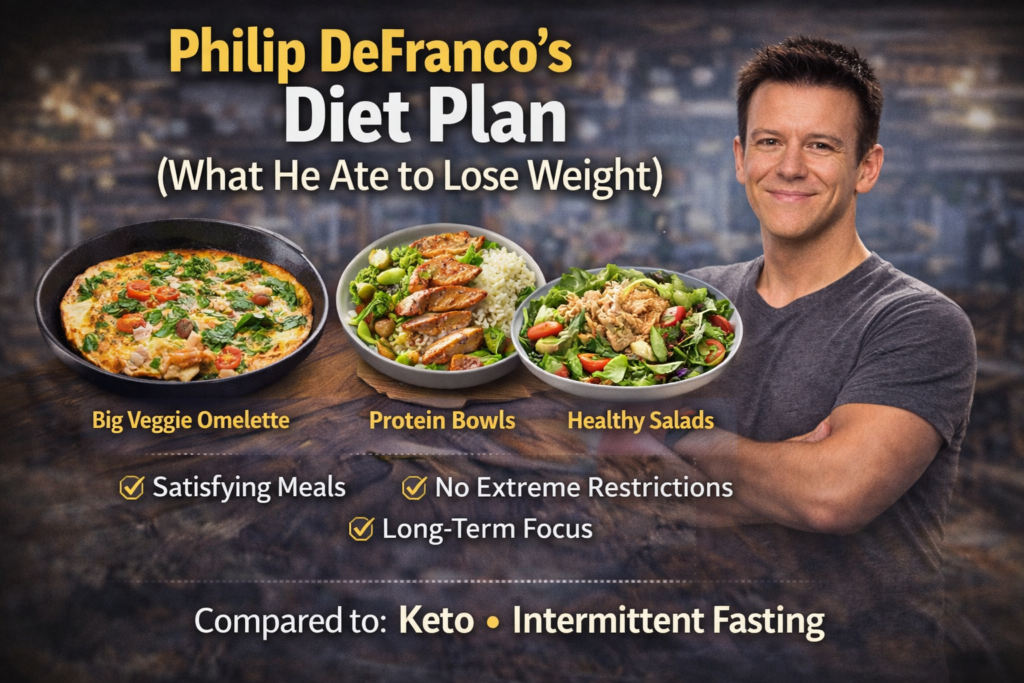
1. Big Veggie Omelette
A commonly referenced meal style includes:
- Eggs or egg whites
- Spinach, peppers, onions
- Optional cheese or lean protein
Why it works:
- High protein
- Vegetable-dense
- Keeps hunger steady through the morning
2. Protein Bowl Breakfast
An alternative for busy mornings:
- Greek-style yogurt or cottage cheese
- Berries
- Nuts or seeds
Why it works:
- Quick to prepare
- Easy to portion
- Portable
3. Smoothie-Style Breakfast (When Time Is Tight)
Typical components:
- Protein powder
- Frozen fruit
- Greens
- Liquid base
Why it works:
- Convenient
- Customizable
- Easy to digest
Sample Lunch Ideas
1. Protein-Forward Salad
Inspired by reports and patterns:
- Grilled chicken, turkey, or fish
- Mixed greens
- Olive oil-based dressing
- Optional grains
Why it works:
- Balanced
- Customizable
- Works for workdays
2. Bowl-Style Meals
A recurring theme in sustainable diets:
- Lean protein
- Vegetables
- Rice, quinoa, or potatoes
Why it works:
- Easy to batch cook
- Flexible
- Familiar structure
3. Leftover-Friendly Meals
Using dinner leftovers for lunch:
- Saves time
- Reduces stress
- Maintains consistency
Sample Dinner Ideas
1. Balanced Plate Dinners
Meals structured around:
- Protein
- Vegetables
- One carbohydrate source
This style supports:
- Family meals
- Portion awareness
- Long-term consistency
2. Simple Home-Cooked Meals
Examples include:
- Stir-fries
- Sheet-pan meals
- Grilled proteins with sides
Why it works:
- Minimal prep
- Scalable for families
- Easy to repeat
Snacks and Flexibility
Rather than cutting snacks entirely, a flexible approach may include:
- Fruit
- Yogurt
- Protein bars
- Simple convenience foods
The key appears to be intentional snacking, not constant grazing.
PART 3: Nutrition Tips for Busy Creators and Parents
Philip DeFranco’s lifestyle mirrors many busy professionals and parents—long workdays, unpredictable schedules, and mental fatigue.
Here’s what his diet approach teaches busy people.
Tip 1: Repeat Meals to Save Mental Energy
Eating the same few meals repeatedly:
- Reduces decision fatigue
- Makes grocery shopping easier
- Builds consistency
Variety can be rotated weekly rather than daily.
Tip 2: Prep Once, Eat Multiple Times
Batch cooking:
- Proteins
- Vegetables
- Base ingredients
makes it easier to stay consistent during busy weeks.
Tip 3: Convenience Isn’t the Enemy
Not every meal needs to be cooked from scratch. Strategic convenience foods can:
- Save time
- Reduce stress
- Prevent impulsive choices
Consistency matters more than perfection.
Tip 4: Build Meals Around Your Schedule
Rather than forcing a rigid eating schedule, align meals with:
- Work demands
- Family routines
- Energy levels
This flexibility increases adherence.
Diet alone wasn’t enough — it worked because it aligned with his exercise and lifestyle routine.
PART 4: Comparing Philip DeFranco’s Diet Approach to Popular Diets
Many people wonder how his eating style compares to trending diets.
Comparison 1: Philip DeFranco’s Diet vs Keto
Keto Focus:
- Very low carbohydrates
- High fat intake
- Strict food rules
DeFranco-Style Approach:
- Balanced macronutrients
- Flexible carbohydrates
- No strict elimination
Key Difference:
Flexibility vs rigidity.
Comparison 2: Philip DeFranco’s Diet vs Intermittent Fasting
Intermittent Fasting Focus:
- Time-restricted eating
- Skipped meals
- Structured eating windows
DeFranco-Style Approach:
- Regular meals
- Consistent energy
- Less emphasis on timing
Key Difference:
Meal consistency vs clock-based rules.
Comparison 3: Philip DeFranco’s Diet vs Crash Diets
Crash Diet Focus:
- Short-term restriction
- Rapid changes
- High burnout risk
DeFranco-Style Approach:
- Gradual adjustments
- Long-term habits
- Maintenance-friendly
Key Difference:
Sustainability over speed.
Why His Diet Approach Worked Long-Term
Philip DeFranco’s diet style worked because:
- It fit his lifestyle
- It minimized stress
- It didn’t rely on extreme discipline
Instead of forcing behavior, it supported it.
How to Apply These Lessons to Your Own Diet
Rather than copying meals exactly, ask:
- What meals can I repeat easily?
- What foods keep me satisfied?
- What works during busy weeks?
Build from there.
Common Mistakes to Avoid When Adopting This Style
- Overcomplicating meals
- Expecting fast results
- Eliminating foods unnecessarily
- Ignoring lifestyle fit
Simplicity is the advantage—don’t remove it.
The Bigger Takeaway: Diet as a Support System
Philip DeFranco’s diet wasn’t about restriction—it was about supporting daily life.
It supported:
- Energy
- Focus
- Consistency
- Long-term maintenance
That’s why it worked.
Final Thoughts: Why This Diet Angle Converts Well
Diet content converts because people want:
- Practical ideas
- Relatable routines
- Sustainable habits
Philip DeFranco’s diet approach offers exactly that—without hype.
If there’s one lesson to take away, it’s this:
👉 The best diet is the one you can live with long term.