
Debunking Rumors, Addressing “Too Skinny” Claims, and Setting Realistic Expectations
Philip DeFranco’s weight loss has been one of the most talked-about physical transformations on YouTube in recent years. As his appearance changed gradually on camera, speculation followed just as steadily. Fans praised his discipline, critics questioned his health, and rumors spread across Reddit, Twitter, and comment sections.
With visibility comes misinformation. Many assumptions online overlook the reality of Philip DeFranco’s actual weight loss journey.
This article breaks down Philip DeFranco weight loss myths vs facts, separating speculation from reality and explaining why so many people misunderstand his transformation. Rather than feeding into rumors, we’ll focus on what’s actually known, what fans often get wrong, and what viewers should realistically take away from his journey.
Why Philip DeFranco’s Weight Loss Sparked So Many Myths
When a public figure changes physically, three things almost always happen:
- Fans compare before-and-after photos
- Rumors spread faster than verified information
- People project their own experiences and fears
Philip DeFranco’s transformation checked all three boxes.
Because his change was:
- Visible over time
- Not announced with a “program” or plan
- Happening while he remained highly visible
It became a blank canvas for speculation.
Myth vs Fact: A Clear Framework
To avoid confusion, this article follows a simple structure:
- Myth: A common claim or rumor
- Fact: What can reasonably be concluded from public information
- Context: Why the myth exists
This approach helps readers understand not just what is wrong, but why it spread.
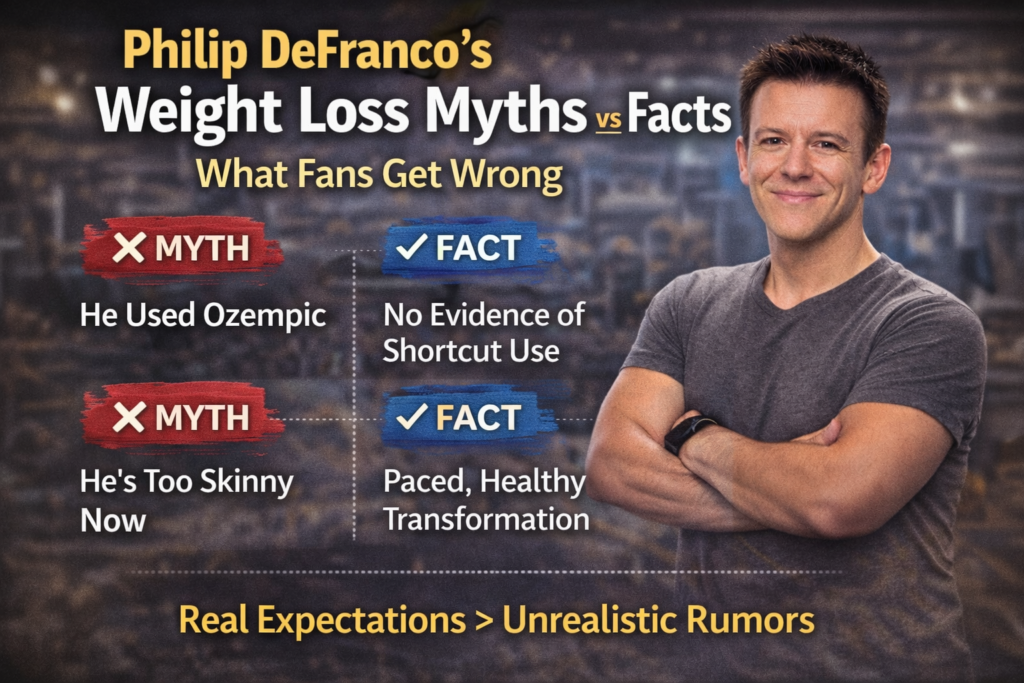
MYTH #1: “Philip DeFranco Used Ozempic or a Shortcut”
Where This Rumor Came From
As weight loss medications entered mainstream conversation, many public figures faced similar speculation. Any visible fat loss now triggers comments like:
- “It must be Ozempic”
- “No way that’s natural”
- “Everyone’s doing it now”
Philip DeFranco was no exception.
The Fact
There is no public evidence or confirmation that Philip DeFranco used Ozempic or any similar product.
What is visible:
- Gradual weight change over a long period
- No sudden or drastic drop
- Maintenance rather than continued rapid loss
These patterns are inconsistent with the rumors fans often describe.
Why This Myth Persists
This myth exists because:
- People underestimate long-term consistency
- Gradual change feels “too slow” to be believable
- Social media normalizes shortcut narratives
When progress happens over many months, it’s easy to forget how powerful consistency can be.
The Bigger Lesson
Not every transformation has a hidden shortcut. Sometimes the least exciting explanation is the most accurate one.
MYTH #2: “He Lost Weight Too Fast”
What Fans Say
Some viewers claim:
- “It happened overnight”
- “One year he looked the same, then suddenly thin”
This perception is common—but misleading.
The Fact
Philip DeFranco’s weight loss unfolded over roughly 18 months or more, with small changes accumulating over time.
When viewers:
- Watch sporadically
- Compare old thumbnails to recent ones
- Skip months of content
The progress feels sudden—even when it wasn’t.
Why This Myth Persists
Human memory compresses time. Gradual change looks dramatic when viewed side-by-side.
The Bigger Lesson
Progress often feels invisible while it’s happening—and obvious in hindsight.
MYTH #3: “He’s Too Skinny Now”
The Reaction
One of the most common reactions online:
- “He’s too skinny”
- “He looked better before”
- “This doesn’t seem healthy”
These comments often come from concern—but also discomfort.
The Fact
There is no objective standard for how someone “should” look, especially when:
- Viewers are used to a certain appearance for years
- Change disrupts familiarity
Philip DeFranco’s current appearance reflects:
- Reduced body fat
- Leaner structure
- Maintained energy and productivity
None of these inherently indicate a problem.
Why This Reaction Happens
People often react negatively when:
- A familiar figure changes
- The change challenges their internal norm
- Weight loss contradicts expectations
The issue is often perception, not reality.
The Bigger Lesson
“Too skinny” is often code for “different than I’m used to.”
MYTH #4: “He’s Promoting Unrealistic Standards”
The Claim
Some critics argue that:
- His transformation pressures viewers
- It sets unrealistic expectations
- It contributes to appearance anxiety
The Fact
Philip DeFranco:
- Did not market a weight loss product
- Did not promote a rigid diet plan
- Did not position himself as a fitness authority
His journey unfolded passively, not as a campaign.
Why This Myth Exists
Any visible change in a public figure can trigger comparison. But comparison doesn’t equal promotion.
The Bigger Lesson
Seeing someone change doesn’t mean you’re expected to do the same.
MYTH #5: “Anyone Can Get the Same Results Easily”
The Assumption
Ironically, some fans swing the opposite direction:
- “If he did it, anyone can”
- “Just do what he did”
This myth can be just as harmful.
The Fact
Philip DeFranco’s lifestyle includes:
- Control over his schedule
- Access to resources
- Years of routine discipline
Not everyone has the same conditions.
Why This Myth Exists
Success stories often get oversimplified. Complexity doesn’t go viral.
The Bigger Lesson
Inspiration should be adapted—not copied.
Addressing the Reddit & Comment Section Narrative
On platforms like Reddit, discussions often amplify extremes:
- Either complete praise
- Or deep suspicion
Balanced takes tend to get less attention.
Common Reddit themes include:
- Concern over appearance
- Speculation about methods
- Nostalgia for his older look
These conversations reveal more about audience psychology than about Philip DeFranco himself.
Why Online Communities Focus on Rumors
Rumors thrive because they:
- Create emotional engagement
- Offer simple explanations
- Turn personal change into public debate
But speculation isn’t insight.
Healthy Transformation vs Visual Shock
One of the biggest misunderstandings is confusing visual shock with negative change.
When someone loses weight:
- Facial structure becomes sharper
- Clothing fits differently
- Body language shifts
These changes can feel jarring—but that doesn’t mean they’re harmful.
Why “Health-Focused” Doesn’t Look the Same for Everyone
People assume:
- “Healthy” has one look
- That look matches their expectations
In reality:
- Bodies adapt differently
- Weight distribution varies
- Progress looks unique
There’s no single visual endpoint.
Realistic Expectations for Viewers
Perhaps the most important section of this article is this one—because this is where many fans go wrong.
What Viewers Often Expect (Unrealistic)
- Fast timelines
- Identical results
- Minimal effort
- Perfect consistency
These expectations are shaped by viral content—not reality.
What Philip DeFranco’s Journey Actually Shows
- Progress takes time
- Habits matter more than hacks
- Maintenance is harder than loss
- Consistency beats intensity
These lessons are less exciting—but far more useful.
What Fans Should Learn (Instead of Speculating)
Rather than asking:
- “How fast did he do it?”
- “What exactly did he take?”
Better questions are:
- “What habits support consistency?”
- “How did he fit this into real life?”
- “What does sustainability look like?”
Those answers matter long after rumors fade.
The Cost of Misinformation
Spreading myths can:
- Discourage people from trying
- Create unnecessary anxiety
- Undermine realistic progress
When we reduce long-term effort to shortcuts, we lose valuable lessons. Understanding these facts helps readers focus on long-term health and sustainable habits, rather than quick fixes.
Final Thoughts: Why Myths Say More About Us Than Him
Philip DeFranco’s weight loss didn’t create myths—our reaction to it did.
The rumors reflect:
- Discomfort with gradual change
- Skepticism fueled by social media
- Unrealistic expectations shaped by trends
When viewed clearly, his journey represents something rare online:
👉 Quiet consistency without spectacle.
And that’s exactly why it was misunderstood.