
Why Mental Clarity, Stress Management, and Consistency Mattered More Than Diet Alone
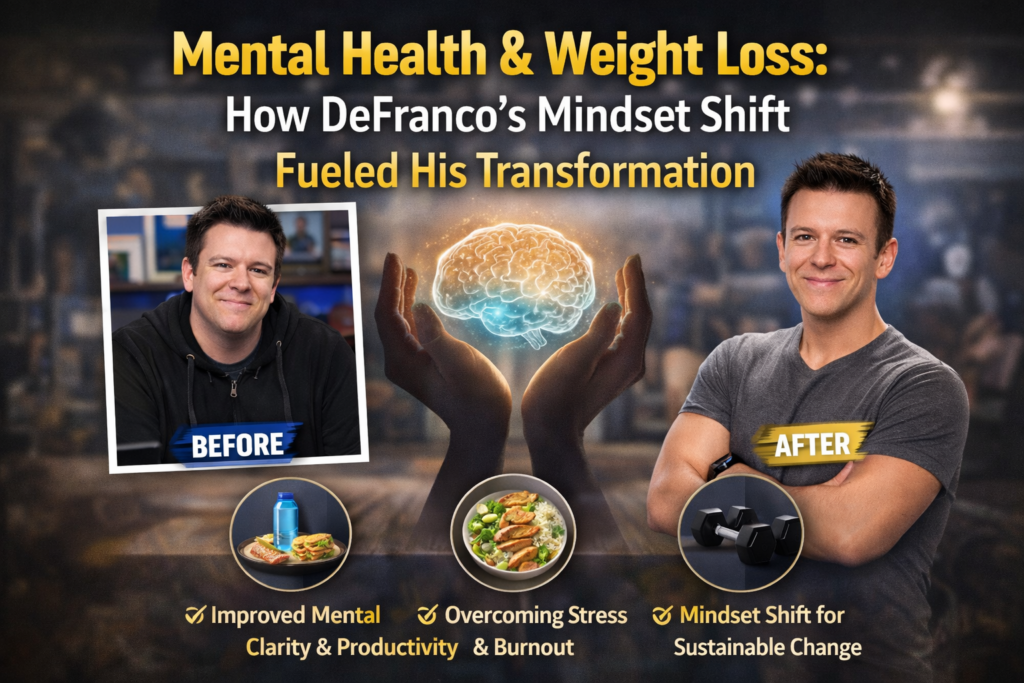
When people talk about Philip DeFranco’s weight loss, the conversation often centers on visible change — the pounds lost, the leaner frame, the before-and-after photos. But the most important transformation didn’t happen on the outside.
It happened in his mindset.
Behind the scenes of Philip DeFranco’s weight loss journey was a profound shift in how he approached stress, productivity, self-discipline, and daily habits. While diet and exercise played an important role, they were only tools. The real driver was a mental reset that allowed those tools to work consistently.
Philip DeFranco’s transformation wasn’t just physical — his weight loss journey itself involved major mental and emotional reminders.
This article explores the mental and emotional side of DeFranco’s transformation, focusing on how clarity, focus, and sustainable thinking helped fuel long-term change.
Why Mental Health and Weight Loss Are Deeply Connected
Weight loss is often framed as a purely physical challenge — calories, workouts, routines. But for most people, the biggest obstacles are mental:
- Stress eating
- Burnout cycles
- All-or-nothing thinking
- Loss of motivation after setbacks
Philip DeFranco’s journey highlights a critical truth:
👉 Lasting physical change usually follows mental change.
Before his transformation, DeFranco was juggling:
- A demanding daily content schedule
- Business leadership responsibilities
- Family life
- Constant online scrutiny
Without addressing mental load and stress, no diet plan would have been sustainable.
The Mindset Shift That Started Everything
From Appearance Goals to Quality-of-Life Goals
One of the most important mindset changes Philip DeFranco made was shifting why he wanted to lose weight.
Rather than focusing on:
- Looking a certain way
- Meeting an external expectation
His motivation became about:
- Energy throughout the day
- Mental sharpness
- Showing up fully for work and family
- Long-term lifestyle alignment
This change in motivation reduced pressure and increased commitment.
When weight loss becomes about how you live, not how you look, consistency becomes easier.
Letting Go of “Fast Results” Thinking
Another major shift was letting go of urgency.
Instead of asking:
- “How fast can I change?”
The question became:
- “What can I repeat every day without burning out?”
This removed the emotional rollercoaster that often comes with extreme goals and replaced it with a calm, methodical approach.
Mental Clarity and Productivity Gains
How Physical Changes Supported Mental Focus
As Philip DeFranco gradually lost weight, he began to notice changes that had little to do with appearance.
These included:
- Improved focus during long workdays
- Better energy consistency
- Reduced mental fog
- Increased motivation to start tasks
For someone who produces daily content, even small improvements in mental clarity can compound into massive productivity gains.
This created a positive feedback loop:
- Better habits →
- More energy and clarity →
- Improved work output →
- Reinforced motivation to stay consistent
Productivity Without Burnout
Before his transformation, productivity often came at the cost of exhaustion. Over time, DeFranco shifted toward habits that supported sustainable output rather than constant overdrive.
This included:
- More structured routines
- Clear boundaries around food and movement
- Fewer energy crashes
As a result, productivity became more predictable — and less stressful.
Stress: The Hidden Barrier to Consistency
Understanding the Stress–Habit Connection
Stress plays a major role in why people struggle with consistency.
High stress often leads to:
- Impulsive food choices
- Skipped workouts
- Disrupted routines
- Emotional decision-making
Philip DeFranco’s work environment is inherently high-pressure, which made stress management a critical factor in his success.
Instead of trying to eliminate stress — an impossible goal — he focused on reducing friction in daily habits.
Simplifying Decisions to Reduce Mental Load
One of the most underrated strategies in DeFranco’s journey was decision simplification.
By:
- Repeating meals
- Keeping workouts straightforward
- Following predictable routines
He reduced the number of daily decisions he had to make. This conserved mental energy and lowered stress, making it easier to stay consistent even on demanding days.
Stress Without Self-Blame
Another important mental shift was removing self-criticism from setbacks.
Instead of viewing missed workouts or imperfect days as failures, they were treated as:
- Temporary disruptions
- Normal parts of a long journey
This reduced emotional stress and prevented minor setbacks from turning into full disengagement.
Burnout: Why Avoiding Extremes Was Critical
The Problem With “All-In” Mentality
Burnout often comes from trying to change everything at once.
Philip DeFranco avoided this by:
- Making incremental changes
- Avoiding extreme restrictions
- Allowing flexibility
This kept his routine from feeling overwhelming.
Burnout thrives in environments where pressure is constant and recovery is ignored. By pacing himself, DeFranco protected his mental energy.
This psychological shift directly supported his diet and exercise routine, helping him stay consistent during difficult phases.
Rest as a Productivity Tool
Rather than seeing rest as weakness, rest became part of the system.
This included:
- Rest days from workouts
- Mental breaks from rigid tracking
- Allowing routines to evolve
By viewing rest as maintenance rather than interruption, consistency became easier to sustain.
Consistency Over Motivation
Why Motivation Wasn’t the Goal
Motivation is unreliable. Philip DeFranco’s approach recognized that systems beat motivation.
Instead of relying on how he felt, he relied on:
- Scheduled habits
- Repeatable routines
- Environmental cues
This reduced emotional dependency and made progress more stable.
Identity-Based Habits
A key mindset shift was identity-based thinking.
Rather than saying:
- “I’m trying to lose weight”
The internal narrative became closer to:
- “This is how I live now”
This subtle shift made habits feel normal instead of temporary, which reduced resistance and increased follow-through.
Emotional Resilience and Public Scrutiny
Managing Opinions From the Outside
As a public figure, Philip DeFranco faced constant commentary — including speculation, concern, and criticism about his appearance.
This could have easily disrupted his progress, but emotional resilience played a key role.
He maintained focus by:
- Prioritizing internal metrics (energy, routine, consistency)
- Avoiding overreaction to online opinions
- Staying aligned with his personal goals
This emotional detachment protected his mindset from external noise.
Confidence Through Alignment
Confidence didn’t come from validation — it came from alignment.
When actions matched values, confidence followed naturally. This internal stability made it easier to ignore distractions and stay consistent.
Why Mindset Determines Sustainability
Short-Term Results vs Long-Term Change
Many people achieve short-term results through extreme effort. Few maintain them.
Philip DeFranco’s journey demonstrates that sustainability is a mindset issue, not just a physical one.
Sustainable change requires:
- Patience
- Flexibility
- Self-awareness
- Emotional regulation
Without these, even the best routines fall apart.
The Role of Self-Trust
As consistency built, so did self-trust.
Each day of follow-through reinforced the belief that:
- Progress was possible
- Habits could stick
- Setbacks were manageable
This self-trust became one of the most powerful motivators in the entire journey.
Lessons People Can Apply to Their Own Lives
Philip DeFranco’s transformation offers practical mindset lessons that extend far beyond weight loss.
1. Focus on Energy, Not Just Results
Energy improvements reinforce consistency.
2. Reduce Stress Before Increasing Effort
Lowering friction matters more than pushing harder.
3. Build Systems, Not Motivation
Reliable routines beat emotional highs.
4. Allow Imperfect Days
Progress survives flexibility, not rigidity.
5. Think in Years, Not Weeks
Long timelines reduce pressure and increase sustainability.
Why Mental Health Is the Foundation, Not a Side Effect
One of the biggest takeaways from DeFranco’s journey is that mental health wasn’t a reward at the end — it was the starting point.
By prioritizing:
- Mental clarity
- Emotional balance
- Sustainable routines
Physical change followed naturally.
This reframes weight loss from a battle against the body to a collaboration with it.
Final Thoughts: The Transformation Beneath the Surface
Philip DeFranco’s weight loss story isn’t just about discipline or physical effort. It’s about mindset evolution.
The visible change was supported by:
- Reduced stress
- Clearer thinking
- Emotional resilience
- Long-term perspective
That’s why the transformation lasted — and why it resonated with so many people.
In a culture obsessed with instant results, his journey is a reminder that lasting change begins in the mind.