
With the growing prevalence of nonalcoholic fatty liver disease (NAFLD) and its more severe form, nonalcoholic steatohepatitis (NASH), there is increasing interest in medications that impact metabolism. Among these, Rezdiffra (resmetirom) has attracted attention—not only for its approved role in treating NASH but also for questions regarding its potential impact on body weight.
One especially common question that appears frequently online and in clinical discussions is:
“How much weight can you lose on Rezdiffra in 3 to 6 months?”
This article will examine that question carefully by reviewing:
- What Rezdiffra is and how it works
- The clinical evidence regarding weight change
- Why Rezdiffra is not a weight-loss drug
- What kinds of changes (if any) have been observed
- What patients should realistically expect
- How lifestyle factors influence outcomes
We’ll also unpack why direct comparisons to weight-loss drugs are inappropriate and provide clear, medically accurate explanations backed by clinical insights.
Note: This content is strictly educational and does not replace medical advice. Always consult a qualified healthcare professional regarding treatment expectations, body weight management, and prescribing decisions.
Section 1: What Is Rezdiffra (Resmetirom)?
Rezdiffra is the brand name for resmetirom, a small-molecule drug that selectively activates thyroid hormone receptor beta (THR-β) in the liver. Its development and regulatory approval are based on its ability to target hepatic metabolism, not systemic weight regulation.
FDA-Approved Indication
The U.S. Food and Drug Administration (FDA) has approved Rezdiffra for:
Treatment of nonalcoholic steatohepatitis (NASH) with fibrosis in adults.
This approval is based on clinical trial data showing improvements in liver fat content and liver histology.
Importantly:
- Rezdiffra is not approved for weight loss
- It is not approved for treating obesity
- Its mechanism does not directly target appetite or energy balance
Any discussion of weight change while taking Rezdiffra must distinguish between incidental observations and intended, approved clinical benefits.
Section 2: How Rezdiffra Works (Mechanism of Action)
Rezdiffra selectively targets thyroid hormone receptor beta (THR-β), a receptor subtype that is particularly abundant in the liver.
Key Actions:
- Enhances hepatic fat oxidation
- Reduces hepatic fat accumulation (steatosis)
- Improves lipid metabolism (e.g., lowering LDL cholesterol)
- Modulates gene expression related to lipid handling
What Rezdiffra Does Not Do:
- It does not suppress appetite
- It does not act on central nervous system hunger centers
- It does not directly increase energy expenditure
- It does not target adipose tissue directly
These distinctions are crucial to understanding why Rezdiffra is not classified as a weight-loss medication.
Section 3: Why People Ask About Weight Loss on Rezdiffra
Interest in the question “how much weight can you lose on Rezdiffra in 3 to 6 months?” stems from several factors:
1. Liver and Metabolic Link
- The liver plays a central role in glucose and lipid metabolism
- Reducing liver fat is sometimes associated with broader metabolic improvements
2. Patient Curiosity
- Individuals diagnosed with NASH often also struggle with overweight or obesity
- Patients may wonder if improving liver health could influence their weight
3. Misinterpretation of Trial Data
- Some trial summaries include weight measurements for safety monitoring
- Patients may misinterpret incidental findings as evidence of weight loss
Understanding the nuance here is essential before answering the weight-loss question.
Section 4: Clinical Evidence on Rezdiffra and Weight Change
Was Weight Change a Primary Trial Endpoint?
No.
In the major Rezdiffra clinical trials, weight was not a primary or key secondary endpoint. Instead, the focus was on:
- Reducing liver fat
- Improving liver histology
- Assessing safety and tolerability
Because weight change was not a designated treatment objective, studies were not powered or structured to detect meaningful weight changes attributable to the drug itself.
What Weight Data Exists?
In most clinical summaries:
- Weight was monitored as part of routine safety assessments
- Some patients had decreases or increases in weight
- These were individual, variable observations
No definitive, statistically significant pattern emerged showing that Rezdiffra caused weight loss.
In short:
- Weight change data exist
- It is not a primary measure
- No consistent effect on weight was demonstrated
Section 5: Reported or Observed Weight Changes
Let’s consider what patients or clinicians might see in 3 to 6 months on Rezdiffra:
1. No Change
A large proportion of individuals may see very little difference in body weight during this time.
2. Small, Incidental Weight Loss
Some patients may lose a small amount of weight (e.g., a few pounds), but this is usually associated with:
- Lifestyle changes (diet, exercise)
- Improved metabolic awareness
- Concurrent therapies
3. Modest Variation
Weight may fluctuate due to many non-drug factors:
- Fluid balance
- Dietary changes
- Exercise patterns
These kinds of changes are not reliably tied to the medication itself.
4. Other Medications Confound the Picture
Patients may be prescribed additional drugs (e.g., GLP-1 receptor agonists) that are known to influence weight, potentially conflating the effects attributed to Rezdiffra.
Section 6: Clinical Trial Insights – What They Show and Don’t Show
Here’s an overview of what clinical data do and do not tell us about weight in Rezdiffra studies:
What Trials Show:
- Rezdiffra significantly reduces liver fat content
- Improvements in NASH histological features occur
- Favorable changes in lipid profiles (e.g., LDL cholesterol)
What Trials Do Not Show:
- Rezdiffra as an effective weight-loss agent
- A consistent pattern of weight reduction attributable to the medication
- Mean weight changes that are statistically significant when compared to placebo solely due to the drug
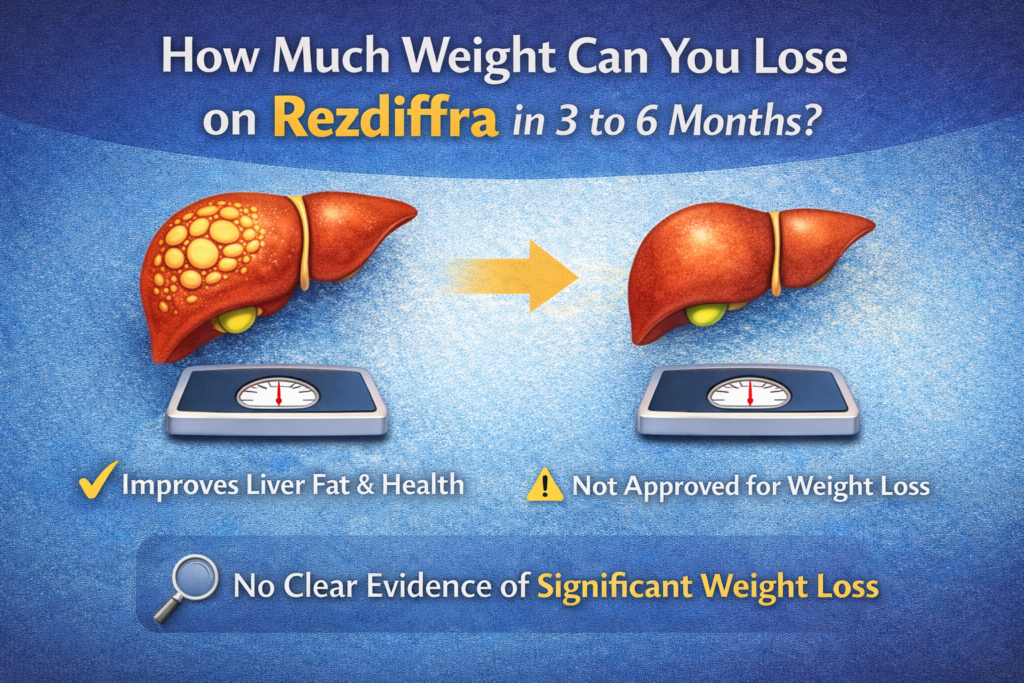
In other words, if you are asking, “how much weight can you lose on Rezdiffra in 3 to 6 months?” — the best evidence suggests that significant drug-induced weight loss should not be expected.
Section 7: Understanding the Difference Between Weight Change and Metabolic Health
It’s important to distinguish between weight change and metabolic health improvements:
Weight Change
- Measured as pounds or kilograms lost
- Influenced by calorie balance, hormones, physical activity, and behavior
Metabolic Health Improvements
- Changes in organ function or biomarkers (e.g., improved liver enzymes)
- Reduced liver fat
- Improved lipid profiles
Rezdiffra clearly impacts metabolic health at the liver level. But weight change is influenced by many other factors outside the drug’s primary mechanism.
Section 8: Why Rezdiffra Is Not a Weight-Loss Medication
To qualify as a weight-loss drug, a medication typically must:
- Modify appetite regulation
- Affect central body weight regulation pathways
- Demonstrate statistically significant weight reduction versus placebo in trials
- Lead to clinically meaningful weight loss (>5% body weight in many study designs)
Examples of medications that meet these criteria include:
- GLP-1 receptor agonists (e.g., semaglutide, liraglutide)
- Peptide or centrally acting weight-loss agents
Rezdiffra does not fit these criteria.
Section 9: How Much Weight Do Some People Report Losing?
Because Rezdiffra is not approved or studied as a weight-loss treatment, there is no consensus figure from clinical trials. Anecdotal reports might mention:
- A few pounds lost over several months
- Changes in overall body composition with lifestyle changes
But these do not represent evidence of a reproducible, drug-induced effect.
When writing for SEO and patient information, always avoid suggesting that Rezdiffra caused specific amounts of weight loss. Instead, you can safely explain that some people may notice incidental weight changes, but the medication itself is not responsible.
Section 10: Factors That Do Influence Weight Change in a 3–6 Month Window
If a patient experiences weight loss during the first 3 to 6 months of treatment, it is often due to broader lifestyle or health interventions, such as:
1. Dietary Changes
Adjusting caloric intake, improving macronutrient balance, and reducing processed foods can significantly influence weight.
2. Physical Activity
Consistent physical activity increases energy expenditure and supports fat loss.
3. Other Medications
Patients may also be prescribed weight-affecting drugs for diabetes or obesity.
4. Behavioral Changes
Improved sleep, stress reduction, and mindful eating habits contribute to healthier weight trajectories.
All of these should be viewed as independent of Rezdiffra’s liver-specific action.
Section 11: What Patients Should Expect in the First 3 to 6 Months
Here is a realistic summary of what a patient might expect after starting Rezdiffra:
Liver Outcomes
- Reduction in hepatic fat (measured by imaging)
- Improved biomarkers of liver injury (e.g., ALT, AST)
- Positive changes in lipid profiles
Weight or Body Changes
- Variable and highly individual
- No predictable average weight loss attributable to the drug
- Some patients may remain stable in weight
- Some may lose weight (primarily due to lifestyle factors)
Side Effects
Reportable side effects can include:
- Mild gastrointestinal discomfort (e.g., nausea, diarrhea)
- Headache
- Fatigue
- Changes in liver enzyme values as monitored by clinicians
Weight loss is not a labeled side effect.
Section 12: Patient Monitoring and Safety Considerations
In clinical practice, weight is routinely assessed as part of safety monitoring. Healthcare providers commonly evaluate:
- Weight trends over visits
- Liver function tests
- Lipid panels
- Metabolic health indicators
They do this to understand overall patient health, not to assess weight loss efficacy of Rezdiffra.
Section 13: Comparing Rezdiffra With Weight-Loss Medications
To understand why Rezdiffra should not be viewed as a weight-loss agent, it helps to compare it with medications that ARE designed for that purpose:
| Feature | Rezdiffra | GLP-1 Weight-Loss Medications |
|---|---|---|
| Primary target | Liver metabolism | Appetite & glucose control |
| Approved for weight loss? | ❌ No | ✅ Yes |
| Appetite suppression | ❌ No | ✅ Yes |
| Clinically significant weight loss demonstrated? | ❌ No | ✅ Yes |
| Mechanism of weight change | Indirect (if any) | Direct |
This comparison makes it clear that Rezdiffra’s role is hepatic and metabolic, not weight regulation.
Section 14: Frequently Asked Questions (SEO-Optimized FAQs)
Q1: How much weight can you lose on Rezdiffra in 3 to 6 months?
Rezdiffra is not approved for weight loss, and clinical trials do not demonstrate consistent, predictable weight changes linked to the medication alone. Some individuals may lose a small amount of weight, but this is likely due to lifestyle factors rather than the drug itself.
Q2: Does Rezdiffra cause weight loss?
Rezdiffra does not inherently cause weight loss. Weight changes reported by some patients are typically coincidental or related to other factors such as diet and physical activity.
Q3: Is weight monitored in Rezdiffra trials?
Yes, weight is often recorded during clinical studies as part of safety assessments, but it is not a primary or key secondary endpoint.
Q4: Should I expect weight loss on Rezdiffra?
No, patients should not expect predictable or significant weight loss simply by taking Rezdiffra.
Q5: What is the main benefit of taking Rezdiffra?
Rezdiffra’s main benefit is improving liver outcomes in NASH patients, particularly reducing liver fat and improving histological markers of disease.
Section 15: Practical Take-Home Messages
- Rezdiffra is not a weight-loss drug and should not be prescribed or used as one.
- Clinical evidence does not support specific weight loss amounts in 3 to 6 months.
- Some people taking Rezdiffra may lose weight, but this is likely due to lifestyle changes, not the medication itself.
- For predictable weight loss, evidence-based lifestyle interventions and approved weight-loss medications should be considered in consultation with a healthcare provider.
- Patients should always discuss expectations with their clinician before starting any medication.
Section 16: Medical Disclaimer
This article is for educational purposes only. It does not provide medical advice, diagnosis, or treatment recommendations. Always consult a qualified healthcare professional before starting, stopping, or changing any medication or treatment plan.
Final Thoughts
The question of “how much weight can you lose on Rezdiffra in 3 to 6 months” is understandable given the link between metabolic disease and weight. However, current evidence and medical understanding clearly indicate that Rezdiffra’s primary and proven effects are on liver health, not weight regulation. Any incidental weight changes observed in patients are most likely related to lifestyle modifications, other medical treatments, or independent metabolic factors.
Focusing on realistic expectations and evidence-based medicine will empower patients and clinicians to make informed decisions about care and overall health management.