
With the recent FDA approval of Rezdiffra (resmetirom) for the treatment of nonalcoholic steatohepatitis (NASH) with fibrosis, interest in this new medication has grown rapidly—not only among liver specialists but also among patients searching online.
One of the most commonly asked questions is:
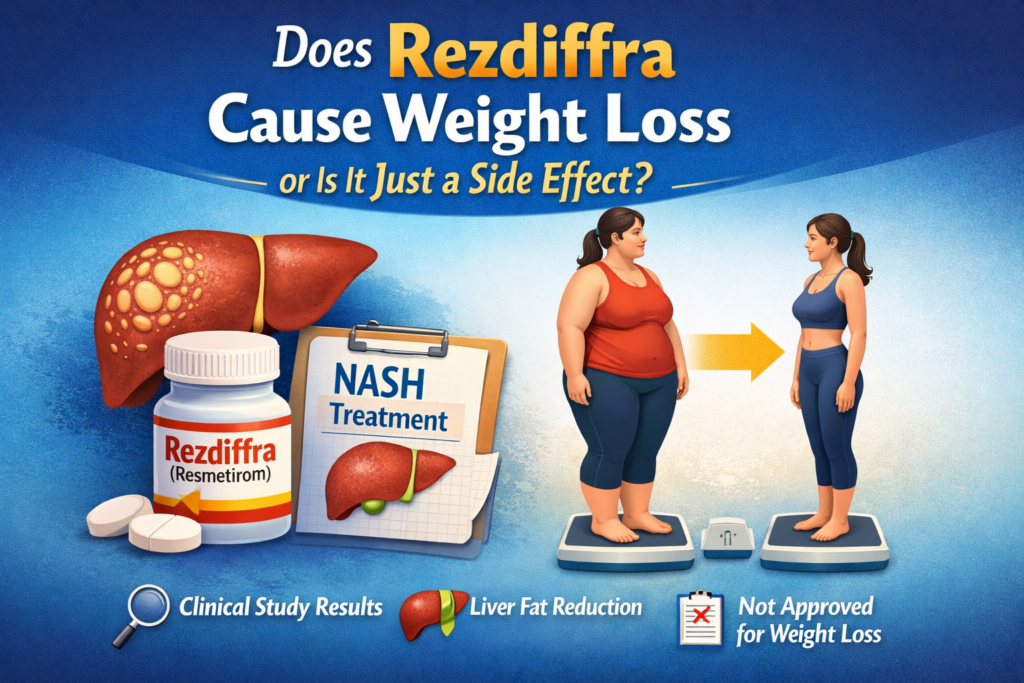
Does Rezdiffra cause weight loss, or is weight loss just a side effect?
This question is understandable. Many metabolic and liver-related medications indirectly affect body weight, either through changes in metabolism, insulin sensitivity, or fat distribution. At the same time, weight loss is a highly sensitive topic, especially in the context of prescription medications that are not approved for obesity treatment.
In this article, we will explore this question in a clear, evidence-based, and compliance-safe manner, focusing on:
- What Rezdiffra is approved for
- How it works in the body
- What clinical trials actually show regarding weight changes
- Whether observed weight loss is intentional, incidental, or secondary
- What patients should realistically expect
This discussion is informational only and does not replace professional medical advice.
What Is Rezdiffra (Resmetirom)?
Rezdiffra, with the generic name resmetirom, is a thyroid hormone receptor beta (THR-β) selective agonist.
FDA-Approved Indication
Rezdiffra is approved for:
- Adults with nonalcoholic steatohepatitis (NASH)
- With moderate to advanced liver fibrosis
Importantly:
- Rezdiffra is NOT approved for weight loss
- It is NOT an obesity medication
- It is NOT a diabetes drug
Any discussion of weight change must therefore be considered secondary to its primary metabolic effects.
Why Are People Associating Rezdiffra With Weight Loss?
The association comes from three main factors:
- Clinical trial observations noted modest weight changes in some participants
- Rezdiffra affects lipid metabolism and fat processing
- Patients with fatty liver disease often experience metabolic improvements alongside treatment
However, correlation does not equal causation—and this distinction is crucial for both patients and content creators.
How Rezdiffra Works (Simplified Explanation)
Rezdiffra selectively activates THR-β receptors, which are found primarily in the liver.
Key effects observed:
- Increased breakdown of liver fat
- Reduced liver inflammation
- Improved lipid profiles (LDL cholesterol reduction)
- Enhanced mitochondrial fat oxidation in hepatic tissue
Unlike thyroid hormone itself:
- It does not significantly stimulate THR-α receptors
- Therefore, it avoids classic thyroid side effects such as palpitations or muscle wasting
Because liver fat plays a role in whole-body metabolism, systemic metabolic changes may follow—but these are not designed as weight-loss mechanisms.
Does Rezdiffra Cause Weight Loss? (Short Answer)
Rezdiffra is not designed to cause weight loss.
However:
Some individuals in clinical studies experienced modest weight reduction, which is considered a secondary metabolic effect, not a primary therapeutic outcome.
This distinction matters for safety, regulation, and patient expectations.
What Do Clinical Trials Show About Weight Changes?
Weight Loss Was NOT a Primary Endpoint
In Rezdiffra clinical trials:
- Primary endpoints focused on liver histology, fibrosis improvement, and lipid markers
- Weight loss was not a treatment goal
- Weight data was collected as part of general safety monitoring
Observed Findings
Some participants experienced:
- Small reductions in body weight
- Mild decreases in visceral fat
- Improved metabolic markers
However:
- Weight loss was inconsistent
- Not all patients lost weight
- Changes were generally modest, not dramatic
This suggests that any weight change is incidental, not guaranteed.
Is Weight Loss a Side Effect of Rezdiffra?
From a regulatory and pharmacological perspective:
- Weight loss is not listed as a primary or intended effect
- It is better described as a secondary observation
- Not classified as a classic “adverse side effect”
In other words:
- Weight change is neither a promised benefit nor a recognized risk
- It occurs indirectly through metabolic modulation
How Rezdiffra Differs From Weight Loss Drugs
It is important not to confuse Rezdiffra with medications like:
- GLP-1 receptor agonists
- Appetite suppressants
- Centrally acting obesity drugs
Key Differences
| Feature | Rezdiffra | Weight Loss Drugs |
|---|---|---|
| Appetite suppression | No | Yes |
| CNS action | No | Often yes |
| Approved for obesity | No | Yes |
| Target organ | Liver | Brain / Gut |
| Weight loss goal | Incidental | Primary |
This explains why weight loss with Rezdiffra, when seen, is usually mild and gradual.
Why Some Patients May Lose Weight on Rezdiffra
Several indirect mechanisms may explain observed weight changes:
1. Reduced Liver Fat Improves Metabolism
Lower hepatic fat content can:
- Improve insulin sensitivity
- Reduce metabolic inefficiency
- Enhance fat utilization
2. Improved Lipid Handling
Better lipid metabolism may:
- Reduce ectopic fat storage
- Decrease visceral adiposity over time
3. Lifestyle Co-interventions
Many trial participants:
- Received dietary counseling
- Made lifestyle changes after NASH diagnosis
- Improved physical activity levels
Weight loss in such cases cannot be attributed solely to the medication.
Does Rezdiffra Suppress Appetite?
No.
Rezdiffra:
- Does not act on hunger centers
- Does not alter satiety hormones
- Does not reduce caloric intake directly
Any weight change occurs without appetite suppression, which further supports the idea that weight loss is not a drug-driven effect.
Can Rezdiffra Help With Belly Fat?
Some patients associate fatty liver improvement with reduced abdominal fat.
However:
- Liver fat ≠ subcutaneous belly fat
- Visceral fat reduction may occur indirectly
- Results vary widely between individuals
There is no guarantee of visible belly fat reduction.
Is Rezdiffra Safe to Use for Weight Loss?
Important Clarification
Rezdiffra should not be used for weight loss purposes.
Using any prescription medication outside its approved indication:
- Requires medical supervision
- Carries ethical and safety considerations
- May not provide expected results
Off-label use decisions should be made only by qualified healthcare professionals.
Who Might Notice Weight Changes?
Weight changes may be more noticeable in:
- Patients with significant liver fat
- Individuals with metabolic syndrome
- Those making concurrent lifestyle changes
But again:
- Results are variable
- No predictable pattern exists
What Patients Should NOT Expect
It is important to set realistic expectations.
Patients should not expect:
- Rapid weight loss
- Appetite suppression
- Obesity-drug-like results
- Cosmetic fat reduction
Rezdiffra is a disease-modifying liver medication, not a weight loss solution.
Common Side Effects of Rezdiffra (Unrelated to Weight)
Reported side effects may include:
- Mild gastrointestinal symptoms
- Changes in liver enzymes (monitored)
- Headache or fatigue in some individuals
Weight loss is not a prominent adverse effect.
Frequently Asked Questions (SEO-Optimized)
Does Rezdiffra cause weight loss?
Rezdiffra is not intended to cause weight loss, though some individuals experience modest weight reduction as a secondary metabolic effect.
Is Rezdiffra approved for weight loss?
No. Rezdiffra is approved for NASH with fibrosis, not for obesity or weight management.
How much weight can you lose on Rezdiffra?
There is no established or guaranteed weight loss amount. Changes, if any, are usually modest.
Is weight loss a side effect of Rezdiffra?
Weight loss is not considered a primary side effect but may occur incidentally in some patients.
Medical Disclaimer
This article is for educational purposes only. It does not provide medical advice, diagnosis, or treatment recommendations. Always consult a qualified healthcare professional before starting, stopping, or changing any medication.
Final Thoughts
So, does Rezdiffra cause weight loss or is it just a side effect?
The most accurate answer is:
Rezdiffra does not cause intentional weight loss. Any observed weight reduction is secondary, indirect, and variable.
Understanding this distinction helps prevent unrealistic expectations and ensures that medications are used safely, ethically, and appropriately.

After 38 Years of Medical Practice I have started to share insights from my experience over this blog. Know more about me here on About Page and Visit my LinkedIn profile.