
In the ever-evolving landscape of weight loss and wellness, few phenomena have captured the public’s attention quite like Ozempic.
Originally developed and FDA-approved as a treatment for Type 2 diabetes, this injectable medication—along with its sister drug, Wegovy, and other GLP-1 receptor agonists like Mounjaro—has become the worst-kept secret in Hollywood and beyond.
From red carpets to suburban fitness centers, the whisper network is alive with stories of dramatic, effortless weight loss.
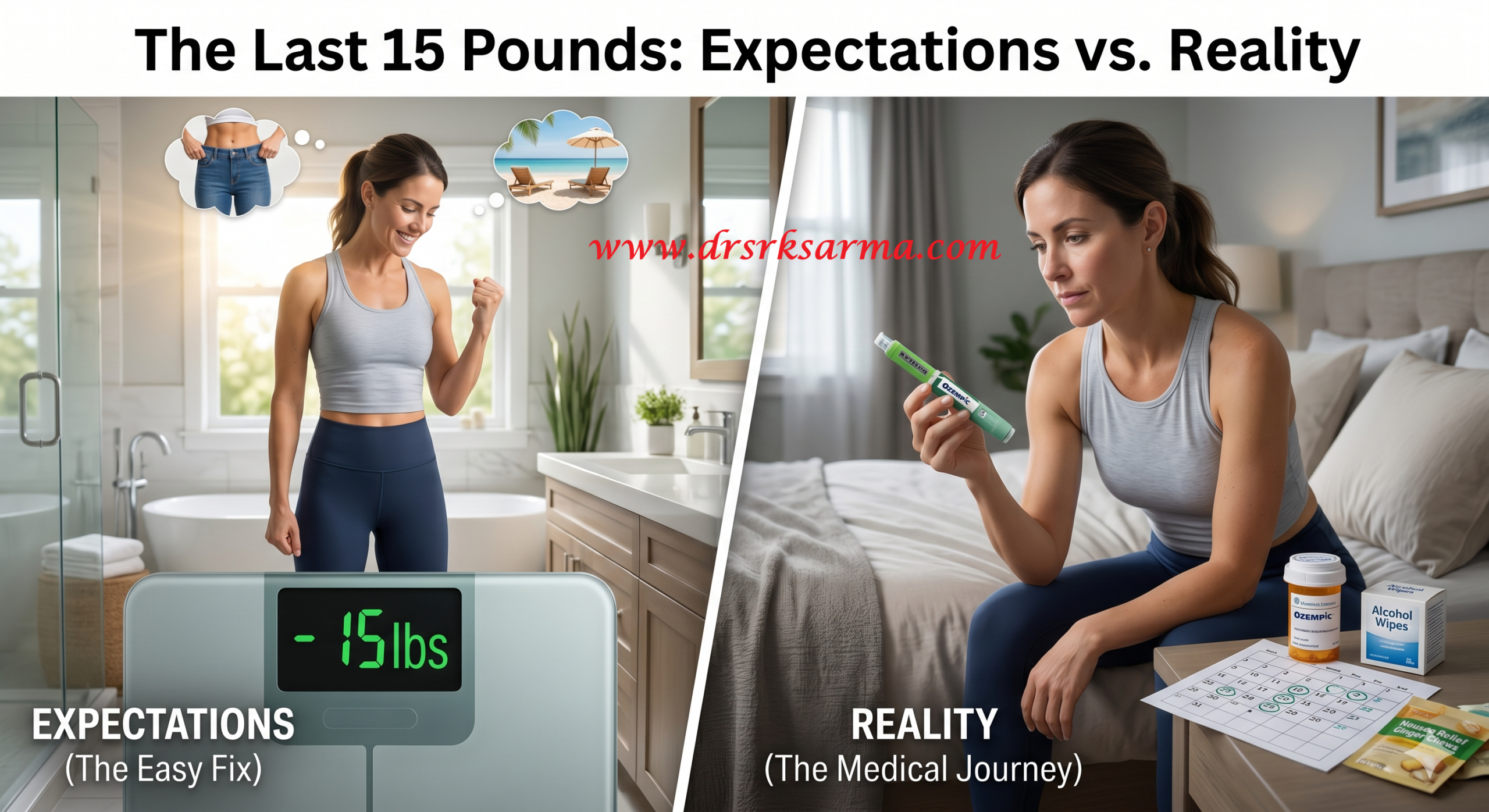
But as the hype reaches a fever pitch, a new trend has emerged: using Ozempic for vanity weight loss. Specifically, people are asking, “Can you use Ozempic just for the last 15 pounds?”
If you are already relatively fit or slightly overweight and find yourself battling that stubborn final layer of fat, the temptation to use a “magic shot” is entirely understandable. The “last 15 pounds” are notoriously the most difficult to shed due to the body’s evolutionary survival mechanisms. But is taking a powerful metabolic drug like semaglutide for small weight loss safe? Is it effective? And most importantly, what happens when you stop?
In this comprehensive (read: long) guide, we will dive deep into the expectations versus the reality of using Ozempic to lose the last 15 pounds. We’ll explore the science of GLP-1 agonists, the physiological hurdles of stubborn fat, the potential side effects for non-obese individuals, the dreaded “Ozempic rebound weight gain,” and evidence-based alternatives for achieving your goals safely.
1. Understanding Ozempic and Semaglutide: What Are They?
Before we analyze the viability of using Ozempic for the last 15 pounds, it is crucial to understand what this medication actually is and how it functions within the human body.
The Science of GLP-1 Receptor Agonists
Ozempic is the brand name for semaglutide, a glucagon-like peptide-1 (GLP-1) receptor agonist. GLP-1 is a naturally occurring hormone produced in the intestines in response to food intake. It plays several critical roles in metabolic regulation:
- Insulin Stimulation: It prompts the pancreas to release insulin when blood sugar levels are high.
- Glucagon Suppression: It prevents the liver from releasing too much glucose into the bloodstream.
- Gastric Emptying Delay: It significantly slows down the rate at which food leaves the stomach, keeping you fuller for longer.
- Appetite Regulation: It communicates directly with the hypothalamus—the brain’s hunger center—to signal satiety and reduce cravings.
When someone injects Ozempic or Wegovy, they are essentially providing their body with a synthetic, long-lasting version of this hormone. The result is a profound reduction in appetite. Users frequently report the silencing of “food noise”—the constant, intrusive thoughts about what to eat next.
FDA Approvals and Medical Guidelines
It is important to differentiate between the brand names and their approved uses.
- Ozempic is FDA-approved specifically for the treatment of Type 2 diabetes to improve glycemic control and reduce the risk of major cardiovascular events.
- Wegovy, which contains the exact same active ingredient (semaglutide) but at a higher maximum dosage, is FDA-approved for chronic weight management.
However, Wegovy’s approval comes with strict prescribing criteria. It is indicated for adults with:
- A Body Mass Index (BMI) of 30 or greater (obesity).
- A BMI of 27 or greater (overweight) in the presence of at least one weight-related comorbidity, such as hypertension, type 2 diabetes, or dyslipidemia.
Using Ozempic or Wegovy when you only have 10 to 15 pounds to lose and do not meet these BMI criteria is considered “off-label” use. While physicians have the legal right to prescribe medications off-label, doing so for purely cosmetic reasons raises significant medical, ethical, and safety concerns.
2. The Anatomy of the “Last 15 Pounds”
Why are the last 10 to 15 pounds so extraordinarily difficult to lose? To understand why people are turning to semaglutide for small weight loss, we must first look at the biology of stubborn fat.
The Set Point Theory and Metabolic Adaptation
The human body is an incredible survival machine, honed by millions of years of evolution to resist starvation. According to the “Set Point Theory,” your body has a preferred weight range that it actively defends.
When you attempt to lose those final 15 pounds by cutting calories and increasing exercise, your body perceives this as a threat. It responds through a process known as adaptive thermogenesis or metabolic adaptation.
- Decreased BMR: Your Basal Metabolic Rate drops. As you become lighter, you naturally burn fewer calories, but your body goes a step further, becoming hyper-efficient at conserving energy.
- Hormonal Shifts: Leptin (the satiety hormone) decreases, while ghrelin (the hunger hormone) skyrockets. You feel hungrier and less satisfied by meals.
- NEAT Down-regulation: Non-Exercise Activity Thermogenesis (NEAT)—the calories you burn fidgeting, walking, and maintaining posture—subconsciously plummets. You simply move less without realizing it.
Stubborn Fat Mobilization
The “last 15 pounds” usually consist of “stubborn fat” stored in the lower abdomen, hips, and thighs. Biologically, fat cells have two types of receptors for catecholamines (fat-burning hormones like adrenaline): alpha-2 and beta-2 receptors.
- Beta-2 receptors accelerate fat mobilization.
- Alpha-2 receptors hinder fat mobilization.
Stubborn fat deposits have a high density of alpha-2 receptors and poor blood flow, making it exceptionally difficult for your body to release and burn these specific triglycerides.
Given these immense physiological hurdles, it is no wonder that individuals exhausted by years of macro-tracking and endless cardio are asking: “Does Ozempic work if you only have 10 pounds to lose?”
3. Can You Use Ozempic Just for the Last 15 Pounds? (The Reality)
The short answer is: Physiologically, yes, it will cause weight loss.
The long answer is: It is highly impractical, potentially dangerous, and likely unsustainable for vanity weight loss.
The Expectations
The expectation is that taking a low dose of Ozempic will simply turn off your appetite for a month or two, allowing you to effortlessly drop the remaining 15 pounds without white-knuckling through a strict diet. You expect to hit your goal weight, stop the medication, and walk away with your new physique.
The Reality
If you are already relatively lean and using Ozempic for vanity weight loss, you are introducing a powerful systemic drug to a body that does not have a metabolic disease.
Because semaglutide forcefully suppresses appetite, users often drop their caloric intake drastically. A person who normally eats 2,000 calories might suddenly struggle to consume 1,000. This severe caloric deficit will undoubtedly lead to weight loss, including the shedding of those stubborn 15 pounds.
However, the weight you lose will not be exclusively fat. This brings us to the first major reality check: Body Composition.
4. The Risks and Side Effects of Ozempic for Non-Diabetics
Taking semaglutide when you only have a small amount of weight to lose amplifies certain risks. When you use Ozempic for 15 lbs, you must carefully weigh these severe side effects.
Muscle Loss and Sarcopenia
One of the most alarming side effects of rapid weight loss induced by GLP-1 agonists is the loss of lean muscle mass. In clinical trials, such as the STEP (Semaglutide Treatment Effect in People with obesity) trials, DEXA scans revealed that a significant portion of the weight lost by participants was lean mass (muscle and bone density).
When you only have 15 pounds to lose, preserving muscle is paramount for aesthetics and metabolic health. If you lose 15 pounds on Ozempic, but 6 pounds of that is muscle, your body fat percentage may barely change. You run the risk of becoming “skinny fat”—smaller in clothing, but softer and less toned overall. Furthermore, muscle is metabolically active tissue. Losing it lowers your resting metabolic rate permanently, making future weight gain almost inevitable.
“Ozempic Face” and Premature Aging
“Ozempic face” has become a viral term, describing the gaunt, deflated, and prematurely aged appearance of the face following rapid weight loss on semaglutide.
Facial fat provides structural support, keeping the skin taut and youthful. When weight is lost too quickly—especially in individuals who are not clinically obese to begin with—the skin does not have time to retract. The result is sagging skin, hollowed cheeks, and pronounced wrinkles. While dermal fillers can temporarily mask this, it is a significant aesthetic drawback for a drug being used for vanity purposes.
Gastrointestinal Distress
The most common side effects of Ozempic are gastrointestinal. Because the drug delays gastric emptying, food sits in the stomach for prolonged periods. Users frequently experience:
- Severe nausea
- Vomiting
- Diarrhea or debilitating constipation
- Acid reflux and sulfur burps
Severe Complications: Gastroparesis and Pancreatitis
In rare but documented cases, GLP-1 agonists can cause more severe complications.
- Gastroparesis: A condition where stomach motility stops completely, leading to chronic vomiting and the inability to digest food.
- Pancreatitis: Inflammation of the pancreas, which is incredibly painful and requires hospitalization.
Risking these severe, potentially lifelong medical conditions to lose 15 pounds of cosmetic weight is a gamble that most endocrinologists strongly advise against.
5. The Ozempic Rebound: What Happens When You Stop?
Perhaps the most critical factor to consider when using Ozempic just for the last 15 pounds is the exit strategy. What happens when you reach your goal weight and stop taking the injections?
The STEP 4 and STEP 1 Extension Trials
The scientific literature provides a clear and sobering answer regarding semaglutide cessation. The STEP 1 extension trial monitored patients who took once-weekly semaglutide 2.4 mg for 68 weeks and then stopped the medication and the lifestyle interventions.
The findings were staggering:
- One year after stopping semaglutide, participants regained an average of two-thirds (66.7%) of their prior weight loss.
- Cardiometabolic improvements (blood pressure, blood sugar, lipids) reverted toward baseline levels.
The Rebound Weight Gain for the “Last 15 Pounds”
Why does this Ozempic rebound weight gain happen?
When you take Ozempic, you are outsourcing your appetite control to a pharmaceutical. The drug artificially lowers your hunger and forces a calorie deficit. It does not fix your metabolism, nor does it teach you sustainable dietary habits.
When you stop the medication, the exogenous GLP-1 clears your system. Your delayed gastric emptying returns to normal. Your appetite comes back—often with a vengeance, driven by the metabolic adaptation we discussed earlier (high ghrelin, low leptin).
If you used Ozempic to drop from 150 lbs to 135 lbs, your body is now primed to regain that weight. Furthermore, if you lost muscle mass during the process, your new baseline metabolism is slower than before you started. As a result, you might quickly regain the 15 pounds, plus an additional 5 pounds, ending up heavier and with a higher body fat percentage than when you began.
To maintain the weight lost on Ozempic, you generally have to stay on Ozempic. For chronic obesity, lifelong medication is a standard and acceptable medical intervention. For dropping 15 pounds to look better in a swimsuit, a lifetime of expensive injections is an absurd and financially draining proposition.
6. Ethical and Supply Chain Considerations
Beyond the physical risks to the individual, using semaglutide for small weight loss carries ethical implications.
Over the past few years, the skyrocketing demand for Ozempic and Wegovy has led to severe, global supply chain shortages. These shortages have left millions of patients with Type 2 diabetes struggling to access the life-saving medication they need to manage their blood sugar and prevent severe complications like neuropathy, blindness, and cardiovascular disease.
When individuals seek out off-label prescriptions to lose 10 to 15 pounds of vanity weight, they directly contribute to this shortage, effectively taking medication out of the hands of those who medically require it. While the emergence of compounded semaglutide has somewhat alleviated this, compounded versions are not FDA-regulated and carry their own risks regarding purity, dosing accuracy, and safety.
7. How to Lose the Last 15 Pounds Stubborn Fat (Without Drugs)
If Ozempic is not the answer for the final 15 pounds, what is? The reality is that overcoming metabolic adaptation requires strategy, patience, and precision, rather than a pharmaceutical shortcut.
Here are evidence-based strategies for how to lose the last 15 pounds of stubborn fat sustainably:
A. Nutritional Periodization and Diet Breaks
Instead of a continuous, aggressive calorie deficit (which triggers metabolic adaptation), use nutritional periodization. This involves cycling between periods of deficit and periods of maintenance.
- The Strategy: Eat in a 300-500 calorie deficit for 3 to 4 weeks. Then, take a “diet break” where you eat at your maintenance calories for 1 to 2 weeks.
- The Science: Diet breaks help upregulate leptin levels, reduce metabolic slow-down, and give you a psychological break from dieting, making long-term adherence much easier.
B. Prioritize Protein and Resistance Training
To ensure that the last 15 pounds you lose are fat and not muscle, you must combine a high-protein diet with progressive overload resistance training.
- Protein Intake: Aim for 0.8 to 1.2 grams of protein per pound of your target body weight. Protein has a high Thermic Effect of Food (TEF), meaning your body burns more calories digesting protein than carbs or fats. It also preserves lean mass.
- Strength Training: Lifting heavy weights 3 to 4 times a week signals your body to hold onto muscle tissue even while in a calorie deficit.
C. Track and Increase Your NEAT
Since your body subconsciously reduces movement when dieting, you must consciously increase it.
- The Strategy: Track your daily steps. If you currently average 5,000 steps, push it to 8,000. If you are at 8,000, aim for 10,000 to 12,000. Small actions like taking the stairs, pacing while on the phone, or using a standing desk can burn hundreds of extra calories a day without spiking hunger the way intense cardio does.
D. Manage Cortisol and Sleep
Chronic stress and lack of sleep elevate cortisol levels. High cortisol causes severe water retention and promotes the storage of visceral fat, completely masking your fat loss efforts.
- The Science: A study published in the Annals of Internal Medicine found that insufficient sleep caused participants to lose 55% less fat and 60% more muscle mass compared to those who got adequate sleep, despite eating the exact same calories.
- The Fix: Prioritize 7-9 hours of quality sleep per night and incorporate stress management techniques like meditation or light yoga.
E. Carb Cycling for Stubborn Fat
As mentioned earlier, stubborn fat has poor blood flow and high alpha-2 receptor density. Carb cycling can help manage insulin levels, allowing your body to tap into these fat stores more effectively.
- The Strategy: Alternate between high-carbohydrate days (on heavy training days) and low-carbohydrate days (on rest or light cardio days). This keeps insulin sensitivity high and encourages fat oxidation on the low-carb days.
8. Conclusion: Is It Worth It?
The allure of the “magic shot” is undeniable. When you have spent months or years fighting the scale for those final, stubborn 15 pounds, the idea of an effortless fix is incredibly tempting.
However, the reality of using Ozempic just for the last 15 pounds falls far short of the fantasy. While it will suppress your appetite and cause weight loss, the cost is steep. You risk losing precious metabolically active muscle mass, suffering from severe gastrointestinal side effects, aging your facial features, and spending thousands of dollars on off-label prescriptions.
Worst of all, the results are almost never permanent. The overwhelming scientific consensus is that stopping semaglutide leads to rapid rebound weight gain. Attempting to cheat the biological realities of body composition with a drug meant for chronic metabolic disease is a temporary lease on a leaner body—a lease with an exorbitant interest rate once you stop paying.
For small, cosmetic weight loss, the traditional pillars of health remain undefeated: strategic nutritional periodization, heavy resistance training, adequate protein intake, and aggressive stress management. It may take longer than an injection, but the body you build will be strong, functional, and yours to keep.
References and Sources
- Wilding, J. P. H., et al. (2021). “Once-Weekly Semaglutide in Adults with Overweight or Obesity.” The New England Journal of Medicine, 384(11), 989-1002. (The STEP 1 Trial on weight loss efficacy and muscle mass loss).
- Rubino, D., et al. (2021). “Effect of Continued Weekly Subcutaneous Semaglutide vs Placebo on Weight Loss Maintenance in Adults With Overweight or Obesity: The STEP 4 Randomized Clinical Trial.” JAMA, 325(14), 1414-1425.
- Wilding, J. P. H., et al. (2022). “Weight regain and cardiometabolic effects after withdrawal of semaglutide: The STEP 1 trial extension.” Diabetes, Obesity and Metabolism, 24(8), 1553-1564. (Data on weight regain after stopping the drug).
- Müller, M. J., et al. (2015). “Metabolic adaptation to caloric restriction and subsequent refeeding: the Minnesota Starvation Experiment revisited.” The American Journal of Clinical Nutrition, 102(4), 807-819. (Explaining set point theory and metabolic adaptation).
- Nedeltcheva, A. V., et al. (2010). “Insufficient sleep undermines dietary efforts to reduce adiposity.” Annals of Internal Medicine, 153(7), 435-441. (Sleep and body composition).
- FDA Prescribing Information for Ozempic (semaglutide) injection. U.S. Food and Drug Administration.
- FDA Prescribing Information for Wegovy (semaglutide) injection. U.S. Food and Drug Administration.

After 38 Years of Medical Practice I have started to share insights from my experience over this blog. Know more about me here on About Page and Visit my LinkedIn profile.