
Starting a new medication for fatty liver disease can bring both hope and uncertainty. One of the most common concerns after being prescribed resmetirom (brand name Rezdiffra) is understanding when the medicine will begin to show results.
Many patients want to know how quickly they should expect improvements in their liver health, blood tests, and symptoms. The good news is that resmetirom begins working inside the liver soon after treatment starts, but the visible benefits often appear gradually over weeks to months.
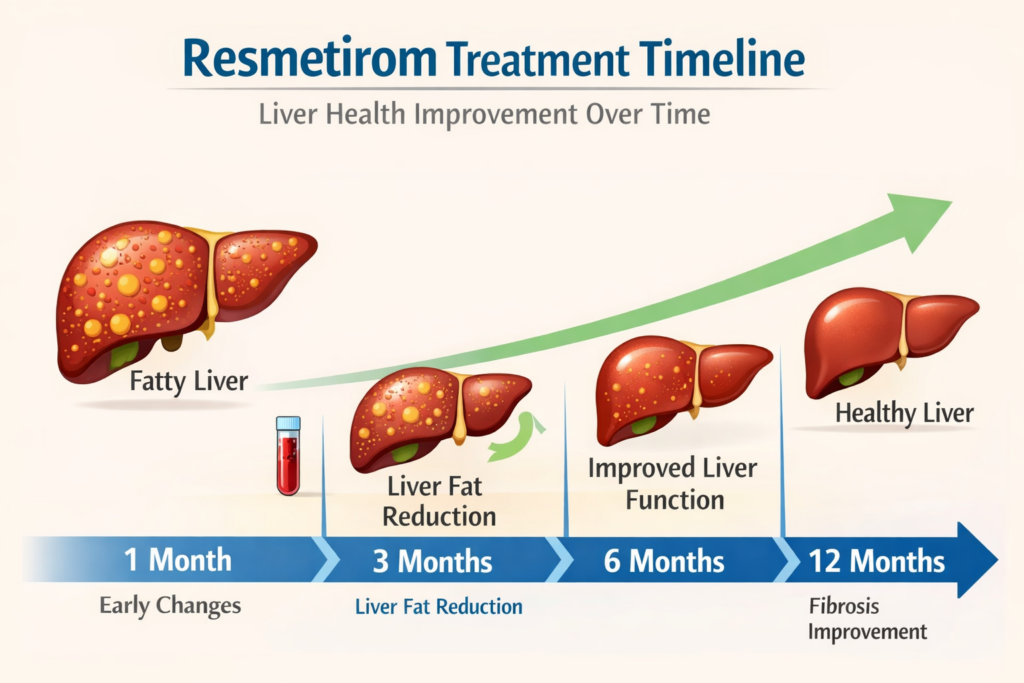
In most cases, early improvements in blood markers may be seen within 4 to 12 weeks, while more meaningful changes in liver fat and fibrosis usually take 3 to 12 months. Because fatty liver disease develops slowly over time, healing also requires patience and consistency.
This article explains the full treatment timeline, what changes happen at each stage, and what you can realistically expect from resmetirom.
Understanding How Resmetirom Works
Resmetirom is the first FDA-approved medicine specifically developed for MASH (metabolic dysfunction-associated steatohepatitis), previously known as NASH, particularly in patients with liver fibrosis.
The medication works by selectively activating the thyroid hormone receptor beta (THR-β) found mainly in the liver. This targeted action helps the liver improve how it handles fats and cholesterol.
As a result, the medicine helps to:
- reduce fat accumulation in liver cells
- improve cholesterol metabolism
- lower liver inflammation
- slow down or reverse fibrosis progression
Unlike medications that only manage symptoms, resmetirom directly targets the underlying metabolic dysfunction in the liver.
Because of this mechanism, improvements often begin internally before a person feels any obvious physical difference.
First 2 to 4 Weeks: The Medication Starts Working Internally
During the first few weeks, most of the action happens at a microscopic level inside the liver.
Although many patients may not notice immediate symptom relief, the medication has already started influencing liver metabolism.
At this stage, resmetirom begins helping the liver:
- burn stored fat more efficiently
- reduce triglyceride production
- lower harmful lipid accumulation
- improve LDL cholesterol handling
This early phase is extremely important because it sets the foundation for longer-term liver healing.
Some patients may notice subtle improvements such as feeling less heavy after meals or experiencing slightly better energy levels, but it is also perfectly normal to feel no visible change yet.
This does not mean the medicine is not working.
4 to 8 Weeks: Early Blood Test Improvements
By the end of the first month and into the second, laboratory improvements often begin to appear.
This is usually the stage when doctors may start noticing changes in liver-related blood tests.
Common markers that may improve include:
- ALT (alanine aminotransferase)
- AST (aspartate aminotransferase)
- LDL cholesterol
- triglycerides
These changes suggest that liver inflammation and fat metabolism are beginning to improve.
For patients who also make dietary changes, results may become noticeable sooner.
For example, combining the medicine with:
- reduced sugar intake
- weight loss efforts
- regular walking or exercise
- intermittent fasting
can significantly enhance the response.
At this point, some individuals report reduced bloating, less post-meal fatigue, and a general feeling of improved metabolic health.
8 to 12 Weeks: First Major Clinical Response
Around the two- to three-month mark, the benefits of treatment become more clinically meaningful.
This is often the first major follow-up point where doctors assess whether the medicine is responding well.
By this time, many patients may show:
- improved liver enzyme levels
- better lipid profile
- reduction in fatty liver indicators
- improved insulin sensitivity
In some cases, imaging studies such as ultrasound or FibroScan may start to show early reductions in liver fat.
This period is encouraging because it confirms that the liver is responding positively.
However, it is important to remember that while liver fat may decrease relatively early, fibrosis takes much longer to improve.
Scar tissue in the liver does not disappear quickly, and meaningful reversal usually requires several more months.
3 to 6 Months: Significant Reduction in Liver Fat
For many patients, the most noticeable improvements happen between three and six months.
This is the phase where liver fat reduction becomes more substantial.
By now, the liver is often functioning more efficiently, and inflammation continues to decrease.
Patients may notice improvements such as:
- increased energy
- better digestion
- less abdominal heaviness
- improved stamina
- gradual weight loss if lifestyle changes are included
This is also the stage where repeat imaging may provide clearer evidence of progress.
A doctor may recommend repeat liver scans or blood tests to evaluate how much fat content has decreased.
For individuals with MASH, this period is crucial because reducing liver fat helps prevent further progression toward fibrosis and cirrhosis.
6 to 12 Months: Fibrosis Healing and Long-Term Results
The most important long-term improvements usually occur over six to twelve months.
This phase focuses more on liver healing and fibrosis stabilization.
While early months are mainly about reducing liver fat and inflammation, the later months support gradual repair of damaged liver tissue.
Potential benefits during this stage include:
- slowing fibrosis progression
- partial fibrosis reversal
- improved liver stiffness scores
- reduced risk of cirrhosis
- better overall metabolic health
Because fibrosis develops slowly, healing is also gradual.
Patients should understand that this is a long-term treatment process rather than a quick fix.
Consistency with medication and lifestyle habits is essential.
What If You Don’t Feel Different?
Fatty liver disease is often called a silent disease because many people have no obvious symptoms.
For this reason, some patients may worry that the medication is not helping if they do not feel a physical difference.
It is important to rely on:
- blood test trends
- imaging results
- doctor follow-up assessments
rather than symptoms alone.
In many cases, the liver may be improving significantly even when the patient feels exactly the same.
Factors That Influence How Fast Results Appear
Every patient responds differently.
Several factors can affect how quickly resmetirom works.
Severity of Liver Disease
Patients with mild to moderate fatty liver often see faster improvements than those with advanced fibrosis.
Weight Loss
Even losing 5–10% of body weight can dramatically improve outcomes.
Diet Quality
A diet high in sugar, processed foods, and refined carbohydrates may slow progress.
Insulin Resistance or Diabetes
Patients with metabolic syndrome may require more time to show visible improvement.
Alcohol Intake
Alcohol can interfere with liver healing and reduce the effectiveness of treatment.
How to Support Faster Liver Recovery
Medication works best when paired with healthy habits.
Helpful lifestyle steps include:
- avoiding sugary drinks
- limiting refined carbohydrates
- walking 30–45 minutes daily
- improving sleep quality
- reducing visceral fat
- following a doctor-approved nutrition plan
These measures can help improve both liver fat and fibrosis outcomes over time.
Final Thoughts
Resmetirom begins working internally within the first few weeks, but meaningful results take time.
A realistic timeline is:
- 1–2 months: early blood marker improvements
- 3–6 months: major liver fat reduction
- 6–12 months: fibrosis healing and long-term liver recovery
The key is patience and consistency.
Liver healing is a gradual process, and combining medication with lifestyle improvement offers the best chance for meaningful recovery.

After 38 Years of Medical Practice I have started to share insights from my experience over this blog. Know more about me here on About Page and Visit my LinkedIn profile.