
Fatty liver disease has become one of the most common liver disorders worldwide, especially in people with obesity, diabetes, insulin resistance, and metabolic syndrome.
Many people often confuse NAFLD and NASH, but the treatment approach can be very different.
With the approval of resmetirom (brand name Rezdiffra), understanding this difference has become even more important.
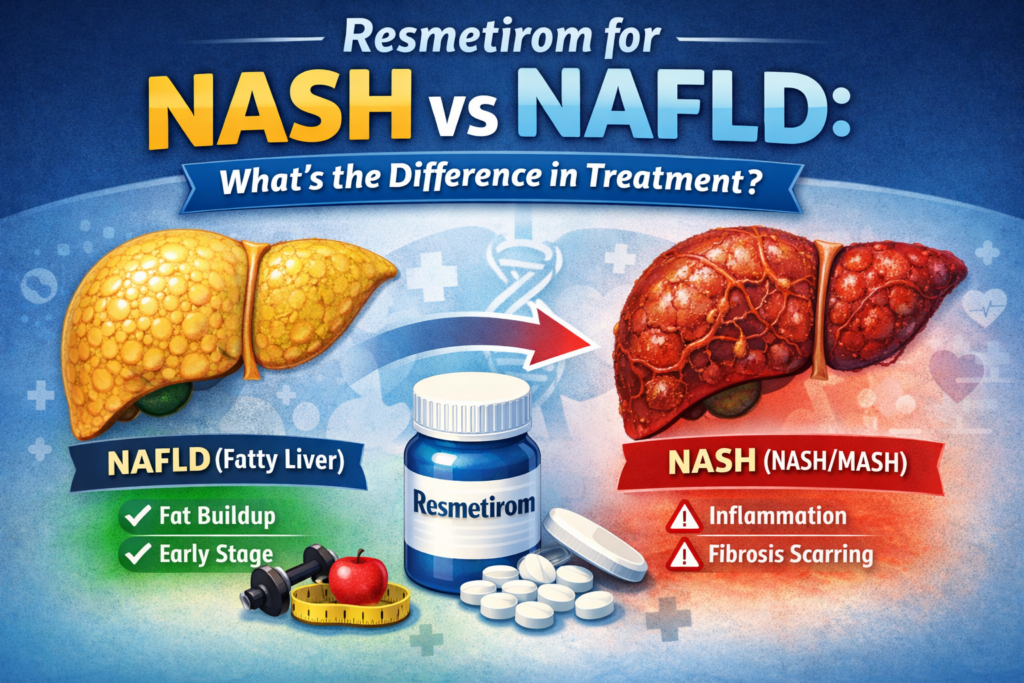
The U.S. FDA approved resmetirom specifically for adults with noncirrhotic NASH (now called MASH) with moderate to advanced fibrosis (F2–F3), along with diet and exercise. It is not approved for simple fatty liver / NAFLD without inflammation and fibrosis.
In this article, we’ll explain the difference in simple terms.
What Is NAFLD?
NAFLD (Non-Alcoholic Fatty Liver Disease) refers to excess fat accumulation in the liver in people who drink little or no alcohol.
It is often called simple fatty liver in early stages.
In many cases, NAFLD causes no symptoms.
Common risk factors include:
- obesity
- high triglycerides
- type 2 diabetes
- insulin resistance
- sedentary lifestyle
- processed food diet
At this stage, the liver mainly has fat buildup, but little or no inflammation.
This means liver damage is still limited.
What Is NASH?
NASH (Non-Alcoholic Steatohepatitis) is the more serious stage of NAFLD.
It means the fatty liver has progressed to include:
- liver inflammation
- liver cell injury
- fibrosis (scarring)
This condition is now commonly referred to as MASH (Metabolic Dysfunction-Associated Steatohepatitis) in newer medical terminology.
If untreated, NASH can progress to:
- advanced fibrosis
- cirrhosis
- liver failure
- liver cancer
This is where treatment becomes much more aggressive.
Fatty Liver Disease Stages Explained
Understanding the stages helps explain where resmetirom fits.
Stage 1: Simple Fatty Liver (NAFLD)
Only fat accumulation
Minimal liver injury
Often reversible with lifestyle changes
Stage 2: NASH / Early Fibrosis
Fat + inflammation
Liver cells begin damage
Early scarring may appear
Stage 3: Moderate to Advanced Fibrosis (F2–F3)
Significant liver scarring
Higher risk of progression
This is the main stage where resmetirom is indicated.
Stage 4: Cirrhosis
Severe irreversible scarring
Liver function impairment
Possible transplant risk
Where Does Resmetirom Fit?
This is the most important difference.
Resmetirom for NAFLD
For simple fatty liver without inflammation, resmetirom is generally not the first-line treatment.
The FDA approval is specifically for noncirrhotic NASH/MASH with F2–F3 fibrosis, not uncomplicated NAFLD.
For early NAFLD, doctors usually recommend:
- weight loss
- exercise
- Mediterranean diet
- blood sugar control
- cholesterol management
Many patients improve significantly with 7–10% body weight reduction.
Resmetirom for NASH
This is where the drug becomes highly relevant.
Resmetirom is a thyroid hormone receptor-beta agonist.
It works mainly in the liver to:
- reduce liver fat
- improve inflammation
- reduce fibrosis progression
- improve cholesterol markers
Clinical trials showed significantly better NASH resolution and fibrosis improvement compared with placebo.
This makes it the first FDA-approved oral medication specifically for NASH/MASH with fibrosis.
Why Treatment Is Different in NAFLD vs NASH
This difference is critical for patient education.
NAFLD Treatment Focus
The main goal is reversing fat accumulation.
Treatment usually includes:
- calorie deficit
- intermittent fasting
- low refined carbohydrate diet
- insulin resistance correction
- physical activity
Medications are usually aimed at metabolic risk factors.
Examples:
- diabetes medicines
- GLP-1 medications
- statins
- weight-loss medications
NASH Treatment Focus
For NASH, the goal is stopping inflammation and preventing scarring progression.
This may include:
- lifestyle modification
- metabolic control
- specialist hepatology follow-up
- resmetirom in eligible patients
Because fibrosis raises the risk of cirrhosis, treatment is more urgent.
Who Should Consider Resmetirom?
Patients may be candidates if they have:
- biopsy-proven NASH / MASH
- fibrosis stage F2 or F3
- noncirrhotic liver disease
- metabolic risk factors
- persistent disease despite lifestyle measures
The FDA specifically states it should be used along with diet and exercise, not as a replacement for lifestyle therapy.
Can NAFLD Become NASH?
Yes.
This is why early treatment matters.
NAFLD can silently progress over years.
Some patients remain stable.
Others develop:
- inflammation
- fibrosis
- cirrhosis
Risk factors for progression include:
- diabetes
- obesity
- high visceral fat
- poor diet
- sleep apnea
- chronic stress
Final Verdict: NASH vs NAFLD Treatment Difference
Here’s the simple summary:
NAFLD = fat in liver → lifestyle treatment first
NASH = fat + inflammation + fibrosis → lifestyle + resmetirom may be needed
Resmetirom is currently designed for the more advanced, clinically significant stage, not simple fatty liver.
That distinction is extremely important for both patients and those who search for knowledge.

After 38 Years of Medical Practice I have started to share insights from my experience over this blog. Know more about me here on About Page and Visit my LinkedIn profile.